Guide · Product information and safe use
What Is Dishwashing Liquid and How Does It Work?
Dishwashing liquid is a cleaning product that makes grease and food residue on plates, glasses and kitchen utensils washable with water; its main ingredients are surfactants, and in everyday language it is also called dish soap. In this guide, as a manufacturer, we explain how dishwashing liquid works, its features and types, whether it is acidic or alkaline, and where it is and is not used.
What is dishwashing liquid?
Dishwashing liquid is a liquid or gel cleaning product containing surfactants, made for washing dishes by hand. It dissolves grease and food residue to clean plates, glasses, pots and kitchen utensils, and rinses off easily with water. The detergent used in a dishwasher is a separate product.
In general, a detergent is a cleaning product containing surfactants that makes dirt and grease removable with water; dishwashing liquid is the type made for washing dishes by hand. The amount to use and the warnings are printed on the pack label; always use the product according to its own label.
How does dishwashing liquid remove grease?
Grease does not dissolve in water, which is why a greasy film remains on a plate washed with water alone. The main ingredients of dishwashing liquids, surfactants, are molecules with one end that likes water and the other that likes grease. These molecules surround grease droplets, break them into small particles and keep them suspended in the water, so the grease leaves with the rinse water.
Foam is a visual sign that the detergent is working, but it is not the only measure of cleaning power. What matters is that the right amount of product comes into contact with the dirt.
What is dish soap, and is it the same as dishwashing liquid?
In everyday language, yes: the liquid or gel product used for washing dishes by hand is also called dish soap. Chemically, however, most of these products are not soap but detergents containing synthetic surfactants; the accurate name is dishwashing detergent.
Soap is made by saponifying vegetable or animal fats with an alkali. In hard water it combines with the calcium and magnesium in the water to form an insoluble residue, so it foams less and can leave marks on surfaces. The synthetic surfactants in detergents keep working in hard water too.
Liquid hand soap is no substitute for dishwashing liquid either; it is made for washing hands, not for breaking down kitchen grease: can you wash dishes with liquid soap.
What are the features of dishwashing liquid?
A good dishwashing liquid dissolves grease, foams, rinses off dishes easily and leaves no odor, slippery feel or marks on plates. Its main properties are:
- Grease cutting: Cleans greasy plates and pots with only a little product.
- Foam: In hand washing, foam shows that the detergent has dispersed in the water; the amount of foam, however, is not the only measure of cleaning power.
- Easy rinsing: it leaves no slipperiness, smell or marks on the dishes.
- Thickness: with thick products a smaller amount is enough; watery products run out faster.
- Scent and colour: It comes in different scents such as lemon and in colours such as green and yellow; scent and colour are a matter of preference and do not indicate cleaning power.
- Skin contact: With frequent and prolonged use it can dry out the hands; if you have sensitive skin, wear gloves.
- Label: Directions for use and warnings should appear legibly on the packaging.
- Documents: for bulk purchases, a certificate of conformity to a product standard such as TS 13773 is requested; details in our wholesale dishwashing liquid guide.
What types of dishwashing detergent are there?
Dishwashing detergents fall into two groups by where they are used: hand-washing products (liquid and gel) and dishwasher products (detergent, rinse aid, limescale inhibitor). The two groups are not interchangeable.
Liquid hand dishwashing detergent
The most common type. It is applied directly to the sponge or added to the wash water. Besides household bottles, it also comes in 5–30 kg canisters for businesses; these are practical for continuous use at the sink.
Gel (tub gel) dishwashing detergent
A thicker form supplied in tubs, buckets or canisters. It is picked up from the container with a damp sponge and is preferred especially for spot use on greasy pots and pans.
See what is gel dishwashing detergent for what it is, gel or liquid dishwashing detergent for a comparison with liquid, and how to use gel dishwashing detergent for the application steps.
Dishwasher detergent
Detergents used in machines are low-foam. If hand dishwashing liquid is used in a machine, the excess foam causes overflow; that is why hand dishwashing liquid does not go in a dishwasher.
Household dishwashers use powder, gel, liquid and tablet types; where each goes and how it is used is explained in the guide how to use dishwasher detergent. In industrial machines, liquid detergent is fed by a dosing pump.
Dishwasher rinse aid and limescale inhibitor
Rinse aid is a liquid used in the rinse stage of dishwashers; it reduces water spots and limescale marks on glasses and plates but does not clean dirty dishes. A limescale inhibitor helps prevent the limescale buildup caused by hard water; a limescale remover, by contrast, is an acidic product that dissolves built-up limescale and must not be mixed with bleach or chlorine products.
Detergent, rinse aid and limescale products for industrial machines are on the industrial dishwasher products page.
What is in dishwashing liquid?
The main ingredients of dishwashing liquid are surfactants, which make grease mixable with water. Alongside them are ingredients that adjust the product's thickness, preservatives that maintain its shelf life, pH adjusters, colour, fragrance and water.
Proportions vary by product and form; the difference between liquid and tub gel products comes largely from consistency and density. Ingredient information is on the pack label; formulas and proportions are specific to each manufacturer.
For the types of surfactants, see our article what is a surfactant, and for the production stages, how is dishwashing liquid made.
Is dishwashing liquid acidic or alkaline?
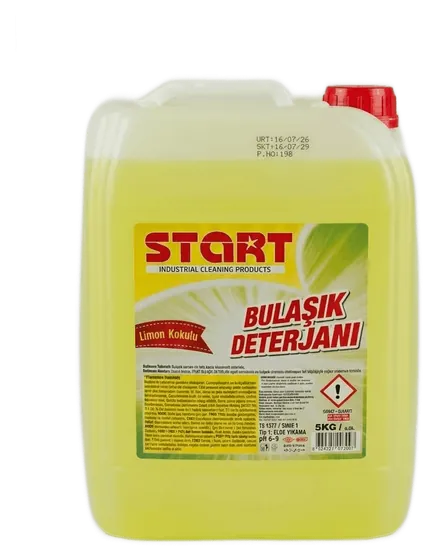
Whether dishwashing liquid is acidic or alkaline depends on the product; the value is stated in the product's safety data sheet. For example, according to its safety data sheet (SDS), START Dishwashing Liquid has a pH of 5–9; in other words, this product is neither a strong acid nor a strong base, and its value lies in the range around neutral.
The safety data sheet for START Dishwashing Liquid also lists the signal word “Warning”, the GHS07 pictogram and the H319 statement (causes serious eye irritation). Avoid contact with the eyes; if it gets into the eyes, rinse with plenty of water for several minutes, remove contact lenses if present, and get medical help if irritation persists.
These values come from START Dishwashing Liquid's own safety data sheet; for the pH of another product, check that product's label and safety data sheet. For what the pH scale shows, see the is surface cleaner acidic or alkaline guide.
Washing dishes by hand with dishwashing liquid: quick steps
In short: put the amount of detergent stated on the label onto a sponge or into the dishwater, scrub the dishes with the sponge and rinse them with plenty of clean water.
- Scrape food leftovers from plates into the trash; do not pour grease down the sink.
- Put the amount of detergent stated on the label onto a wet sponge, or add it to the dishwater.
- Wash glasses first, then cutlery and plates, and greasy pots and pans last.
- Rinse the dishes with plenty of clean water.
- Leave the dishes to dry in a dish rack or dry them with a clean cloth.
- For washing order, amounts and common mistakes, see the guide how to use dishwashing liquid.
Where is dishwashing liquid used?
Dishwashing liquid is mainly used for washing plates, glasses, pots, pans and cutlery by hand. Besides home kitchens, its main places of use are offices and tea kitchens, hand washing in restaurant and café kitchens, canteens, and hotels and guesthouses. In the kitchen it is also used for the following jobs:
- Light grease on the worktop and around the hob: Wiped with a little washing-up liquid added to warm water and rinsed; burnt-on grease needs a degreaser or cream cleaner.
- Cooker hood filter and grill rack: Soaked in hot water with washing-up liquid and brushed; heavy grease on stainless steel parts is cleaned separately with a degreaser, and degreaser is not used on aluminium filters.
- Plastic food containers: Plastic surfaces hold on to grease; wash with warm water and detergent and rinse thoroughly.
Where should dishwashing liquid not be used?
Dishwashing liquid is not used in dishwashers, for laundry, on glass and mirrors or on car paint. There is a separately formulated product for each of these jobs.
- Dishwasher: Hand dishwashing liquid foams excessively in a machine; the foam overflows and the machine may stop. Only detergent made for dishwashers is used in the machine.
- Laundry: It produces too much foam in a washing machine and is hard to rinse out of fabric when washing by hand: wash clothes with dish soap.
- Grease stain on clothes: Dishwashing liquid is not made for fabric; a stain remover is preferred for the stain (how to remove grease stains).
- Glass and mirrors: If the foam is not rinsed off well, it leaves streaks and a film: clean windows with dish soap.
- Car paint: It strips the wax; use car shampoo to wash a car.
- Off-label uses: Use the product only for the purpose stated on its label.
The difference between washing-up liquid and dishwasher detergent
- Foam: Washing-up liquid foams a lot; dishwasher detergent is low-foaming, because in the machine foam confuses the pump and sensors and causes overflow.
- Use: Dishwasher detergent goes into the machine's detergent compartment or, in an industrial machine, into the dosing pump; hand dishwashing liquid goes onto the sponge or into the water.
- Contact: Dishwasher detergent is not used for washing dishes by hand; used by hand, it can irritate the skin and leaves residue on the dishes. Wear gloves when handling the product.
- Similar names: Liquid dishwasher detergent and dishwashing liquid have similar names, but they are different products. If the product name does not include "makine" (machine), it is for hand washing.
- For the types of machine detergent and how to choose one, see the guide what is dishwasher detergent.
What should you watch out for when using dishwashing liquid?
- Do not exceed the amount on the label; more detergent does not mean better cleaning, only longer rinsing and residue.
- Avoid contact with the eyes; if it gets into the eyes, rinse with plenty of water.
- Wear gloves when washing dishes often or for long periods, and if you have sensitive skin.
- Do not mix dishwashing liquid with bleach or other cleaning products, and do not put them in the same container or bottle: can cleaning products be mixed.
- Store the product in its original, labeled container, closed and out of the reach of children; do not transfer it to drink bottles.
- According to the safety data sheet for START Dishwashing Liquid, the product is stored in its original container, closed and upright, in a dry, well-ventilated place and within the temperature range stated on the sheet.
- If swallowed accidentally, follow the first-aid instructions on the label and call 114, Turkey's National Poison Information Center (UZEM).
What is dishwashing liquid called in other languages?
- English: dishwashing liquid; washing-up liquid in the UK
- German: Spülmittel or Geschirrspülmittel
- French: liquide vaisselle
- Spanish: lavavajillas or detergente para platos
- Russian: средство для мытья посуды
- Arabic: سائل غسيل الصحون
- Persian: مایع ظرفشویی
- Dishwasher detergent is a separate product; hand dishwashing liquid is not used in a dishwasher.
Tetikoğlu Kimya dishwashing liquids and pack sizes
For everyday use at home, 750 g and 750 ml bottles are practical, and 5 kg canisters suit offices and small businesses; at restaurant and canteen sinks, 20 and 30 kg canisters cut down on frequent bottle changes. For greasy pots and pans, the gel form can be applied directly to the dirty area. The products below are different brand and pack options; use each product according to its own label.
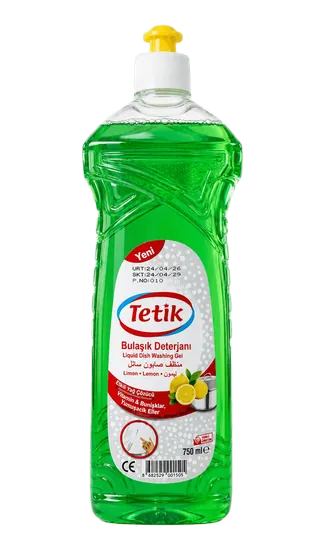
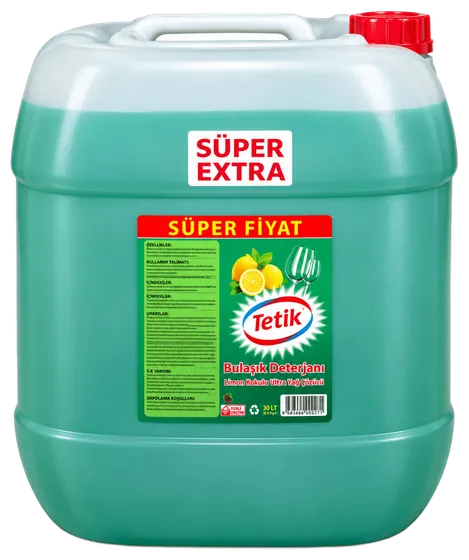
- TETİK Dishwashing Liquid: 750 g (16 per case), 5 kg (4 per case), 20 kg and 30 kg (sold singly).
- TETİK Dishwashing Liquid — Extra: 30 kg (sold singly).
- TETİK Dishwashing Liquid (PET packaging): 5 kg PET canister (4 per case).
- START Dishwashing Liquid: 5 kg (4 per case).
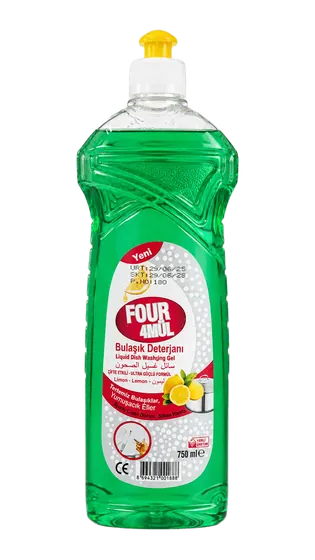
- FOUR4MÜL Dishwashing Liquid: 750 ml (16 per case).
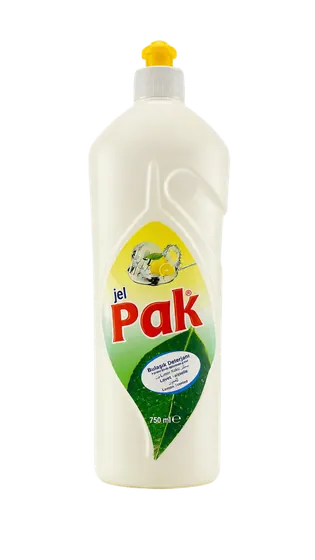
- JELPAK Dishwashing Liquid: 750 ml (16 per case).
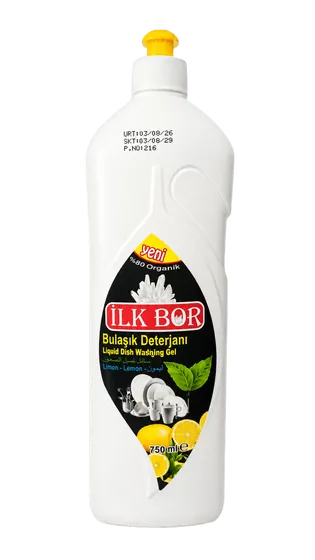
- İLK BOR Dishwashing Liquid: 750 ml (12 per case).
- TETİK Gel Dishwashing Detergent: 200 g tub (32 per case), 10 kg and 35 kg (sold singly).
- START Gel Dishwashing Detergent: 35 KG (sold individually).
- Brand guides: what is FOUR4MÜL dishwashing liquid, what is JELPAK dishwashing liquid, what is İLK BOR dishwashing liquid.
- Product codes and case details are on the dishwashing liquids category page. Tetikoğlu Kimya has been producing cleaning products since 1997; production is in İkitelli OSB and is presented on the production page.
Dishwashing liquid for restaurants, hotels and canteens
In restaurants, hotels, canteens, cafés and office kitchenettes, using a dosing pump or measuring cup for hand washing keeps consumption under control; decant large packs into clean, dry, labeled dispensers or pump bottles for use.
In kitchens with an industrial dishwasher, hand-washing detergent is not put in the machine; detergent, rinse aid and limescale products for the machine are a separate group. Keep the two product groups on separate shelves and in labelled packaging.
For packaging and documentation in bulk purchasing, cleaning companies and businesses can see the guide choosing wholesale dishwashing liquid, and for buying together with other product groups, the wholesale cleaning products page. All pack sizes are on the dishwashing liquids page; you can request a quote for bulk orders.