Guide · Product information and safe use
What Do the Warning Signs on a Cleaning Product Label Mean?
There are three things to look at on a cleaning product label: the signal word (“Warning” or “Danger”), the red-bordered symbols and the hazard statements that begin with the letter H. Three symbols appear on our product labels: corrosion, exclamation mark and environment. This guide explains what each one means, which of our products carry it and what a user who sees the symbol should do.
What do the words “Warning” and “Danger” on the label mean?
These two words are called signal words and show how severe the hazard is: “Danger” is used for the more serious hazard categories, “Warning” for the less severe ones.
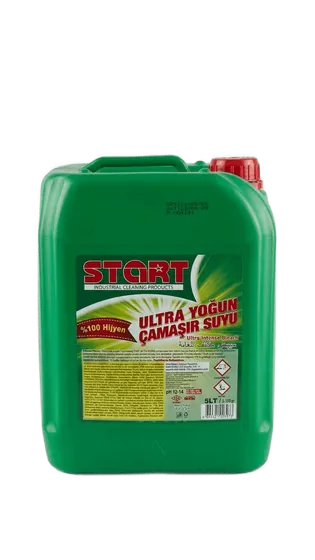
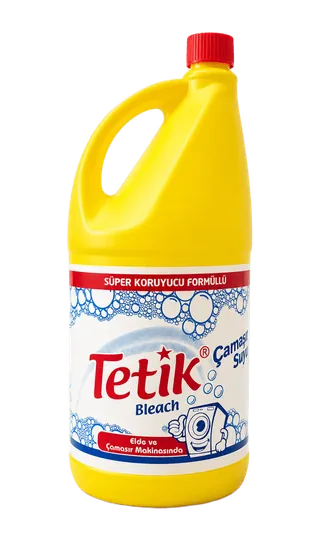
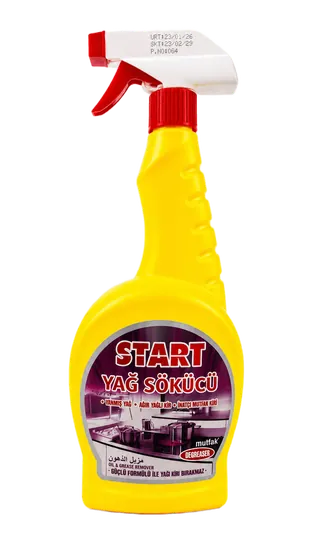
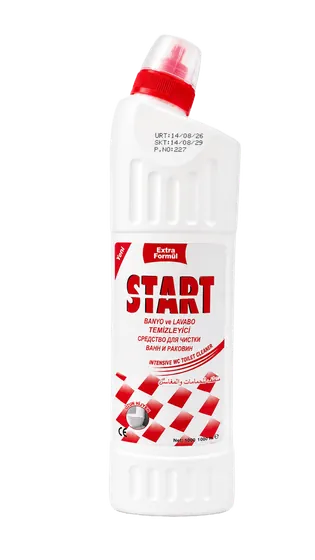
According to the safety data sheets, the signal word for our dishwashing liquid, glass cleaner, hand cleaning liquid, all-purpose surface cleaner and fabric softener products is “Warning”. For the bathroom & toilet cleaner, limescale & rust remover, degreaser, bleach and mineral liquid cream cleanser, the signal word is “Danger”.
What do the red-bordered symbols on the label mean?
- Corrosion (GHS05): shows that the product can cause serious harm to skin and eyes. Among our products, START Bathroom & Toilet Cleaner, START Limescale & Rust Remover, START Degreaser and START Bleach carry this symbol.
- Exclamation mark (GHS07): shows less severe hazards, such as eye or skin irritation. START Dishwashing Liquid, START Glass Cleaner and START Hand Cleaning Liquid carry this symbol.
- Environment (GHS09): shows that the product is harmful to the aquatic environment. START Bleach and START Ultra Thick Bleach carry this symbol.
- A product can have more than one symbol: START Limescale & Rust Remover carries both the corrosion symbol and the exclamation mark, and the bleaches carry both the corrosion and the environment symbols.
What do the statements starting with H mean?
Hazard statements are written with the letter H and three digits; they put the hazard shown by the symbol into a sentence. The following statements appear in the safety data sheets of our products:
- H314: Causes severe skin burns and eye damage.
- H318: Causes serious eye damage.
- H319: Causes serious eye irritation.
- H315: Causes skin irritation.
- H317: May cause an allergic skin reaction.
- H335: May cause respiratory irritation.
- H400 and H410: Very toxic to aquatic life; with long lasting effects.
- Precautionary statements, which begin with the letter P, say what to do for prevention, response, storage and disposal.
Signal words and symbols on our product labels
The table below shows the signal word, symbols and hazard statements in the safety data sheets of our products. The table is generated from safety data sheet data; the information on the label of the product you buy prevails.
| Product | Signal word | Hazard pictograms | Hazard statements |
|---|---|---|---|
| START Bleach | Danger | GHS05 — Corrosion GHS09 — Environment | H314 Causes severe skin burns and eye damage. H318 Causes serious eye damage. H400 Very toxic to aquatic life. H410 Very toxic to aquatic life with long lasting effects. |
| START Ultra Thick Bleach | Danger | GHS05 — Corrosion GHS09 — Environment | H314 Causes severe skin burns and eye damage. H318 Causes serious eye damage. H400 Very toxic to aquatic life. H410 Very toxic to aquatic life with long lasting effects. |
| START Degreaser | Danger | GHS05 — Corrosion | H314 Causes severe skin burns and eye damage. H317 May cause an allergic skin reaction. H318 Causes serious eye damage. |
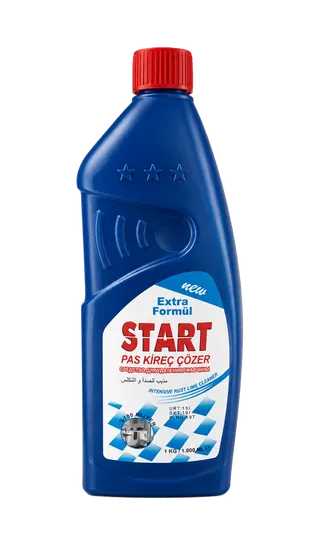
| START Limescale & Rust Remover | Danger | GHS05 — Corrosion GHS07 — Exclamation mark | H314 Causes severe skin burns and eye damage. H318 Causes serious eye damage. H335 May cause respiratory irritation. |
| START All-Purpose Surface Cleaner | Warning | GHS07 — Exclamation mark | H319 Causes serious eye irritation. |
| START Bathroom & Toilet Cleaner | Danger | GHS05 — Corrosion | H314 Causes severe skin burns and eye damage. |
| START Dishwashing Liquid | Warning | GHS07 — Exclamation mark | H319 Causes serious eye irritation. |
| START Floor Scrubber Surface Cleaner | Warning | — | H319 Causes serious eye irritation. |
| START Foam Hand Soap | Warning | GHS07 — Exclamation mark | H319 Causes serious eye irritation. |
| START Glass Cleaner | Warning | GHS07 — Exclamation mark | H319 Causes serious eye irritation. |
| START Hand Cleaning Liquid | Warning | GHS07 — Exclamation mark | H319 Causes serious eye irritation. |
| START Mineral Liquid Cream Cleanser | Danger | GHS05 — Corrosion | H318 Causes serious eye damage. |
| START Soft Fabric Softener | Warning | GHS07 — Exclamation mark | H315 Causes skin irritation. |
What should a user who sees the symbol do?
- If there is a corrosion symbol: wear gloves and safety goggles and ventilate the area; do not let the product touch skin or eyes.
- If there is an exclamation mark: do not get the product in your eyes; wash your hands after use.
- If there is an environment symbol: do not pour the product directly onto soil, into a stream or into a storm drain.
- For every product: read the instructions for use and the warnings on the label before use; store the product out of the reach of children, in its original packaging.
- Do not mix: Do not mix these products with bleach, chlorinated products or each other; harmful gas can form. For details, see can cleaning products be mixed.
- In case of an accident: If swallowed, do not induce vomiting; rinse the mouth with water and call 114, Turkey's National Poison Information Center (UZEM). In a serious situation such as shortness of breath, call 112.
What is the difference between the label and the safety data sheet?
- Label: it is on the product; it carries the signal word, the symbols, short warnings and the instructions for use. It is for everyone who uses the product.
- Safety data sheet (SDS): a separate 16-section document; it contains details on first aid, storage, transport and personal protection. It is for workplaces and institutional purchasing.
- The signal word, pictograms and statements also appear on the product label; the label and section 2 of the SDS carry the same information.
- For the sections of the sheet and how to read it: what is a safety data sheet. The sheets for our products are listed on the safety data sheets page.
- For storage and transport rules: how to store and transport cleaning products.