Guide · Car wash and vehicle care
How to use car shampoo: step-by-step car washing
Car shampoo is used with the car in the shade and the bodywork cool: first loose dirt is removed with pressurised water, the shampoo is put into the foam tank at the amount on the label, the foam is applied from the bottom up, rinsed off from the top down before it dries, and the car is dried with microfiber. In this guide we explain, as the manufacturer, how to use it with a pressurised foam tank and with a bucket, why hair shampoo is not recommended, how to choose a car shampoo and what to watch out for when washing.
Our products in this guide
How do you use car shampoo? The short answer
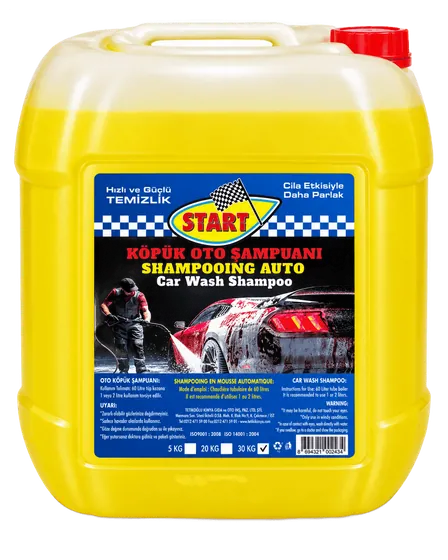
Car shampoo is applied to pre-rinsed, cool bodywork at the amount and by the method on the label, then rinsed off with plenty of water before it dries on the surface. Our START Car Shampoo label describes it as a foaming car shampoo and states use with a pressurised foam tank; in other words, the product's main use is foam washing with a foam tank.
Most scratches come from sand on the paint being dragged by a mitt or sponge. That is why the order matters: first the sand and dust are removed with water, then the foam softens the dirt, and if contact is needed, it is made only with a soft mitt.
Step-by-step car shampoo use
- Choose the spot: Wash the car in the shade while the bodywork is cool; in the sun, shampoo dries quickly and leaves spots.
- Pre-rinse: Rinse the car with pressurised water from the top down to remove loose dust, mud and sand.
- Prepare the tank: Put car shampoo into the foam tank in the amount on the label; follow the tank's own filling and pressure instructions.
- Apply foam from the bottom up: Start at the lower panels and work up to the roof; this way the dirtiest areas stay in the foam longer, and the foam does not leave dirt streaks as it runs down over clean surfaces.
- Leave it on without letting it dry: Keep the foam on the surface for the time on the label; if any area starts to dry, rinse it immediately.
- Go over by hand if needed: On very dirty cars, go over the foamed surface with a soft microfibre wash mitt in straight lines and with light pressure.
- Rinse from the top down: Starting from the roof, rinse with plenty of water so that no shampoo residue is left; do not forget the door edges and the areas under the mirrors.
- Dry: Pat dry with a clean microfibre towel; do not let the water dry on its own, as it leaves limescale marks.
How do you use car shampoo with a pressurised foam tank (foam tank)?
With a pressurised foam tank, car shampoo is put into the tank at the amount on the label and the tank is pressurised according to its manufacturer's instructions; the foam is applied to the pre-rinsed car from the bottom up and rinsed off with pressurised water before it dries. Our START Car Shampoo label also states use with a pressurised foam tank.
The water, air and pressure settings of a foam tank vary from model to model; follow the manufacturer's user manual when filling and pressurising the tank. If the foam is not dense enough, check the tank settings and the nozzle first instead of adding more product; going above the amount on the label makes rinsing harder.
Why is foam applied from the bottom up?
Lower panels, bumpers and side sills are the dirtiest parts of a car. When foaming starts at the bottom, these areas stay in the foam longer; if you started at the top, the foam running down would leave uneven streaks on the dirty surface. For the detailed foam order, see the guide how to use car wash foam.
Rinsing with pressurised water
Hold the pressure washer at least an arm's length from the paint and at an angle rather than straight on. Do not hold it close to stone-chipped areas, trim and seal edges or tyre edges; rinse from the top down.
Foam tank care after use
After washing, empty the tank and hose according to the tank manufacturer's instructions and rinse them with clean water. Product left standing in the tank can dry in the nozzle and reduce foam quality.
Car shampoo for hand washing with a bucket
Without a foam tank, the car can be washed by hand with two buckets as a general method: the first bucket holds shampoo water, the second only clean water for rinsing the mitt. The use stated on the START Car Shampoo label is with a pressurised foam tank; for hand washing too, follow the product label for the amount and use.
After each panel, first rinse the mitt in the clean water bucket, then dip it into the shampoo bucket. This keeps the sand picked up from the paint out of the shampoo water, so it does not come back as scratches on the next panel.
- Start with the roof, windows, hood and trunk; leave the lower panels and bumpers until last.
- Do not use kitchen sponges or rough cloths; a sponge holds sand on its surface, while a microfibre mitt draws sand in between its fibres.
- Do not scrub in circles; circles cause fine scratches that show up in the light.
- Use a separate mitt and sponge for the wheels and lower panels, so that brake dust is not carried onto the paint.
- In hot weather, wash the car in small sections and rinse each section right away.
Can you wash a car with hair shampoo? Can you wash a car with shampoo?
No, it is not recommended. Hair shampoo is made for hair and the scalp, not for car paint; the additives that make hair soft and shiny can leave a film, marks and residue on the paint, and it is also hard to rinse off. A car should be washed only with a product made for car washing, such as car shampoo or car wash foam.
The same applies to other cleaning products at home. With regular use, strong cleaners such as dishwashing liquid and laundry detergent can thin the wax and protective layers on the paint and dry out plastic and rubber parts; powder detergent that does not fully dissolve can create a risk of scratches and leave residue.
- Hair shampoo: Can leave a film and marks on the paint; not recommended even in an emergency.
- Dishwashing liquid: A strong degreaser; it can strip wax and the protective layer. For details, see what is car shampoo.
- Laundry detergent: Leaves residue, and its foam is hard to rinse off: can you wash a car with laundry detergent.
- Liquid soap and hand soap: Not made for car paint: can you wash a car with liquid soap.
- Surface cleaner: Made for floors and hard surfaces, not for car paint: can you wash a car with surface cleaner.
- Car shampoo: Loosens dirt, lets the mitt glide over the surface and rinses off easily; for waxed and coated cars, the neutral type is preferred.
How is car wash shampoo made? Can you make it at home?
Making car shampoo at home is not recommended, so we do not give a recipe. With homemade mixtures, foam, rinsing and suitability for paint cannot be controlled; mixtures made with products such as dishwashing liquid or soap can strip wax and the protective layer. Use a ready-made car shampoo and follow its label.
In production, car shampoo is prepared with measured raw materials and quality control. We describe the production process in outline in our how is car shampoo made guide. Mixing cleaning products yourself is not safe either; for the reasons, see the can cleaning products be mixed guide.
What should you look for when choosing a car shampoo?
When choosing a car shampoo, look first at how you will use it (pressurised foam tank or hand washing), then at the label information, the pack size and whether you want shine at the end of the wash. Choose a product whose label states the way you will use it.
- Method of use: If you wash with a foam tank, choose a product whose label states use with a foam tank; the START Car Shampoo label describes it as a foaming car shampoo and states use with a foam tank.
- Label information: The amount to use, the method and the warnings must be clearly stated on the label; a product without them cannot be applied correctly.
- Vehicle surface: on waxed or ceramic-coated cars, pH neutral car shampoo is preferred to protect the coating.
- Rinsing: A product that rinses off easily and leaves no film or marks on the paint shortens washing time.
- Pack size: START Car Shampoo comes in 5 KG, 20 KG and 30 KG canisters; the 5 KG size suits individual and small-scale use, while the 20 KG and 30 KG canisters are preferred by businesses with a high washing volume.
- If you need a wax foam: For businesses that want to add shine to the paint after washing, TETİK Car Wash Foam — with Wax is a separate product in a 30 KG pack.
- Containers and product choice for businesses: choosing wholesale car shampoo.
What should you watch out for when using car shampoo?
- Eye contact: According to the warning on our START Car Shampoo label, the product must not come into contact with the eyes; keep your face away from the nozzle when applying foam.
- Ventilation: According to our label, use only in well-ventilated areas; ventilate the space in an enclosed wash bay.
- Sun and hot bodywork: Do not let the foam or shampoo water dry in the sun; dried shampoo leaves marks and rings.
- Amount: Do not exceed the amount on the label; too much product makes rinsing harder and can leave residue on the surface.
- Mixing: Do not mix car shampoo with other cleaning products; store the product in its original packaging, with the cap closed and out of the reach of children.
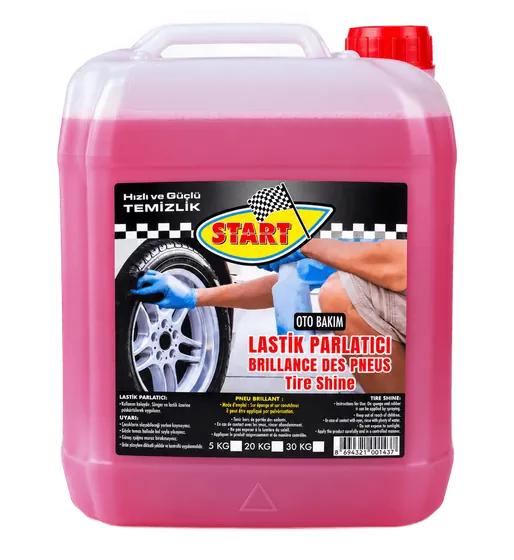
- Wheels and tyres: Wheels and tyres need separate products and separate equipment: how to clean car wheels. For tyre sidewalls, START Tyre Shine is used; according to its label, it must not be left in sunlight. For application, see how to use tyre shine.
- Windows: If the glass shows marks after washing, see the guide how to clean car windows.
- Before use, read the instructions and warnings on the pack label.
Care after washing and special cases
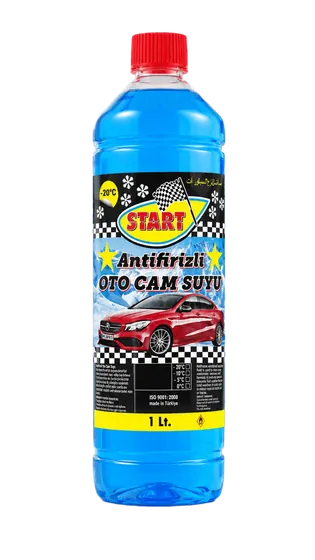
In winter, fill the washer reservoir with antifreeze windscreen washer fluid; it helps keep the water in the reservoir from freezing in cold weather. For the washing sequence in salty, cold weather, see the how to wash a car in winter guide.
Bird droppings, tree sap and bug residue can damage the paint, so they should be cleaned off without delay: how to remove bird droppings from a car, how to remove bugs from a car. For caravans, see how to clean a caravan; for the list of equipment you need for washing, see car wash supplies.
START Car Shampoo and pack options
Our START Car Shampoo label describes it as a foaming car shampoo and states use with a pressurised foam tank; the warnings on the label are to avoid contact with the eyes and to use it only in well-ventilated areas. The product comes in 5 KG, 20 KG and 30 KG containers.
Product codes and case details are on the car shampoos category page. Tetikoğlu Kimya has been manufacturing cleaning products since 1997; production takes place in İkitelli OSB.
For car washes, fleets and car service centers
At busy car washes, fleet maintenance areas and car service centers, preparing the shampoo at the amount on the label every time, with a dosing system or measuring cup, gives consistent results and keeps consumption under control. At businesses that use a foam tank, keeping the tank settings fixed gives the same foam quality.
For other products used in service and workshop areas, see our car service cleaning supplies guide. For bulk purchases you can request a quote, and for buying direct from the factory see our wholesale cleaning products page.