Guide · Car wash and vehicle care ·
How to Use Car Wash Foam?
Foam washing is the most common method at car washes: the foam sits on the vehicle surface and loosens the dirt, so it can be removed with pressurised water without scratching the paint. Car foam with wax also adds shine to the paint after washing. In this article we explain step by step how to use car wash foam.
How does foam washing work?
Foam stays on the car's surface longer than liquid. During this time its cleaning agents soften road dirt and dust and lift them off the surface; the dirt is held in the foam and flows away with the pressurised water. Sandy, dusty dirt is thus removed without rubbing against the paint, and the risk of scratches in the following hand wash is reduced.
How to use car wash foam: step by step
- Wash the vehicle in the shade while the paint is cool; foam dries quickly in the sun.
- Put the product into the foam machine at the ratio stated on the label.
- Wet the vehicle with a pressure washer to remove loose dust and mud.
- Apply the foam from the bottom up and leave it for a few minutes without letting it dry.
- Rinse from top to bottom with a pressure washer.
How to do a foam car wash with a home pressure washer
- Fit a foam lance: A foam bottle (foam lance) suitable for the machine is fitted to the end of the pressure washer; the machine's own detergent tank usually does not produce thick foam.
- Fill the bottle: Water and car wash foam are put in the bottle in the ratio on the product label; more product does not clean better and only makes rinsing longer.
- Adjust the foam: The adjustment screw on top of the bottle sets the foam consistency and spray angle; the foam should be thick enough to stay on the surface for a few minutes.
- Pre-rinse: The car is first wetted with the pressure washer; coarse mud and sand are removed.
- Apply the foam: The foam is applied from the bottom up, panel by panel; do not work in the sun or on hot paint, and do not let the foam dry.
- Rinse: When the time on the label is up, the car is rinsed from the top down with the pressure washer; door edges, under the mirrors and around the number plate are rinsed separately. For wheels see the how to clean alloy wheels guide.
Why is foam applied from the bottom up?
The lower parts of the vehicle are the dirtiest. When foam is applied starting from the bottom, it stays longest on these areas, and foam running down from above leaves no marks on the lower parts. Rinsing goes from top to bottom so that dirty water does not run over areas already cleaned.
Foam machine and foam lance
- Foam machine (foam tank): a tank used in car washes that produces thick foam with compressed air; a long hose reaches every part of the vehicle.
- Foam lance for pressure washers: a foam bottle fitted to the end of a pressure washer; used at home and in small businesses.
- Foam consistency: it changes with the air and water settings on the machine; the foam should be neither too wet nor too dry and should not run off the surface immediately.
Washing sequence for car washes
- Pre-rinse with pressurised water: coarse mud and sand are removed.
- Foam application: from bottom to top, left to dwell without drying.
- Rinsing: from top to bottom with pressurised water.
- Hand wash if needed: for heavy dirt, with car shampoo and a wash mitt.
- Wax foam and drying: dry with a microfibre cloth after the final rinse.
Common mistakes in foam washing
- Foam in the sun or on hot paint: The foam dries within minutes and leaves ring-shaped marks; work in the shade on cool paint.
- Skipping the pre-wash: Sand and mud stay under the foam and scratch the paint when rinsed; remove the coarse dirt with pressurised water first.
- Foam from top to bottom: Foam started at the top does not stay long enough on the lower parts; foam from the bottom up, rinse from the top down.
- Too much product: A stronger mix does not clean better; rinsing takes longer, a film remains on the paint and consumption rises; the amount on the label is enough.
- Incomplete rinsing: Foam collects at door edges, under the mirrors and in the boot-lid seams; rinse these spots separately.
- Treating foam as the only step: Foam is a pre-wash; with heavy dirt a hand wash with shampoo and the two-bucket method follows.
What to watch out for
- Do not let the foam dry on the vehicle; dried foam can leave marks.
- For very dirty vehicles, a hand wash with car shampoo can follow the foam.
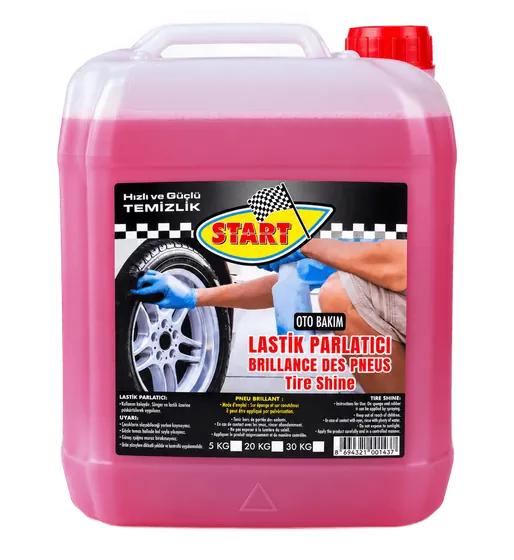
- For tyres, tyre shine is used separately; keep it away from brake discs and the tyre tread.
- After use, run clean water through the foam machine to rinse it.
- For using foam when washing trucks, lorries and buses: how to wash a truck.
- For what pH neutral car shampoo is: what is pH neutral car shampoo.
After the foam: hand wash, drying and finishing
- Hand wash if needed: Foam is a pre-wash; if a greasy road film and stuck-on dirt remain, the car is washed with the two-bucket method, car shampoo and a wash mitt (how to use car shampoo).
- Final rinse: After the shampoo, the car is rinsed once more from the top down with plenty of water; no product should remain on the panels.
- Drying: The car is dried with a large, clean microfibre drying towel, by patting or pulling in one direction; water drops left to dry leave marks.
- Bird droppings and insect marks: Marks that the foam does not soften are cleaned separately before drying (how to remove bird droppings from a car).
- Tyres and interior: Once dry, the tyres are treated with tyre shine, and the interior is cleaned in its own order (how to clean a car interior).
- In businesses: At car washes foam, shampoo, rinse and drying are done in the same order for every car; the order is written into the staff instructions and the foam machine is rinsed with clean water at the end of the day.
Maintaining the foam machine and foam gun
- Rinse at the end of the day: Product left in the tank and hose dries and blocks the nozzle; empty the tank and run clean water through the line.
- Nozzle and filter: If the foam starts to thin or come out unevenly, remove the nozzle and inlet filter and clean them with warm water; do not pick at them with a metal tip.
- Hose and fittings: A cracked hose lowers the pressure and makes the foam watery; check the seals regularly.
- Changing product: When switching to a different foam product, empty and wash the tank completely; do not mix the two products.
- Winter storage: Leave no water in the tank or hose; frozen water cracks the parts. For winter washing see the how to wash a car in winter guide.
Waxing car wash foam
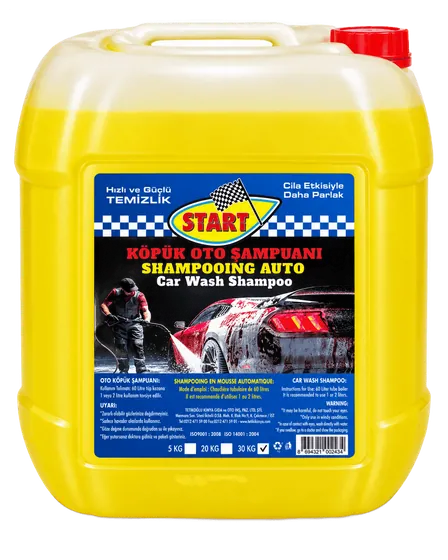
TETİK Car Foam — Wax is produced in 30 KG packs for car wash and detailing businesses, fleet maintenance centres and fuel stations; the product is in the car care chemicals category. Full supplies list for a business: car wash supplies.