Guide · Kitchen and dishes ·
How to Clean Glass Bottles
The narrow neck and deep body of glass bottles make the inside hard to clean; water bottles develop green film and limescale marks from standing water, while oil and sauce bottles get an oily layer stuck to the inside. A glass bottle is washed with lukewarm water and dishwashing liquid using a bottle brush, rinsed until no detergent remains and dried completely upside down. This guide explains how to clean the inside of a glass bottle, oily bottles and oil cruets. For water jugs, see the guide how to clean a water jug.
Before you start
- Empty the bottle: pour out any water, oil or drink left in the bottle and rinse it with lukewarm water.
- Choose a brush: use a soft-bristled bottle brush suited to the length and neck width of the bottle.
- Remove the cap: take the cap, seal and any pourer off the bottle.
- Avoid sudden temperature changes: do not fill a cold bottle with boiling water; the glass may crack.
How to clean glass bottles: step by step
- Fill the bottle halfway with lukewarm water and add a small amount of TETİK dishwashing liquid.
- Scrub the inside of the bottle with the bottle brush, including the bottom and the shoulder.
- Wash the cap, seal and pourer separately with a small brush.
- Rinse the bottle and parts under running water, shaking several times, until no detergent remains.
- Place the bottle upside down on a drying rack and do not close the cap until it is completely dry.
How to clean the inside of a glass bottle
Inside a bottle that the hand cannot reach, the length and flexibility of the brush matter; use a bendable bottle brush that reaches the bottom. For very narrow bottles that no brush fits into, fill the bottle with lukewarm soapy water, leave it for a while, close it, shake it well and rinse thoroughly; repeat if needed. Leave the bottle to dry completely to avoid water marks inside. For water bottles and flasks, see the guide how to clean a water bottle.
How to clean oily glass bottles and oil cruets
The oily layer stuck to the inside of olive oil and sauce bottles does not come off with water alone. Fill the bottle with lukewarm water and add a little TETİK gel dish detergent or dishwashing liquid, close it, shake it and leave it until the oil softens. Then scrub the inside with the bottle brush and rinse under running water until no detergent remains. Wash the pourer and cap of the cruet separately; make sure the inside is completely dry before refilling it with oil. Bottles with darkened or sticky oil residue inside may need repeated pre-treatment.
Green, limescale-marked and yellowed bottles
- Green film: forms from water left standing in the light; empty the bottle, scrub the inside and bottom with lukewarm soapy water, rinse thoroughly and dry completely. Refresh the water every day.
- Limescale marks: fresh limescale marks usually come off with lukewarm water, dishwashing liquid and a soft brush; for thick limescale, use a food-safe descaler according to the manufacturer's instructions. Limescale removers made for bathrooms and tiles and hydrochloric acid are not used in bottles.
- Yellowing and cloudiness: if the glass surface is worn or scratched, cleaning will not remove it; you may stop using these bottles for food.
- Detailed steps for jugs: how to clean a water jug.
New and reused bottles
- Wash a newly bought glass bottle with the steps above and rinse it before use.
- Soak bottles you plan to reuse in lukewarm water to remove their labels; for leftover adhesive, see the guide how to remove sticker residue.
- If the cap seal has residue or cracks, replace the cap.
- Check the manufacturer's information to make sure bottles are suitable for the dishwasher.
What not to do
- Using bleach or surface cleaner in bottles.
- Using bathroom limescale remover or hydrochloric acid in bottles.
- Filling a cold bottle with boiling water.
- Leaving detergent residue in the bottle.
- Closing the bottle before it is completely dry.
For cafés and restaurants
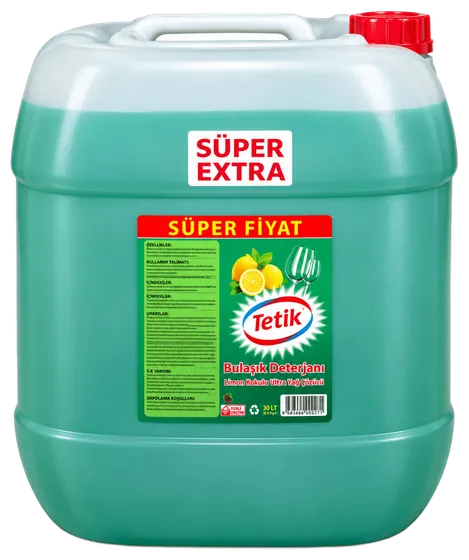
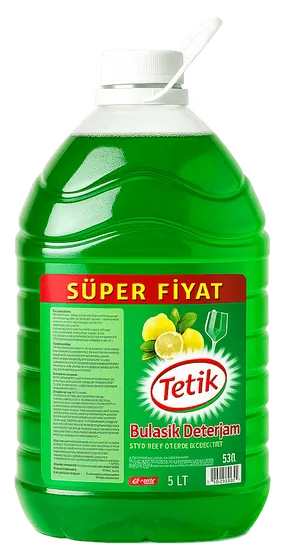
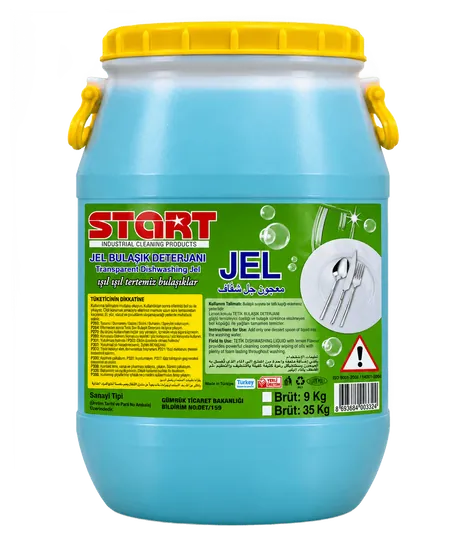
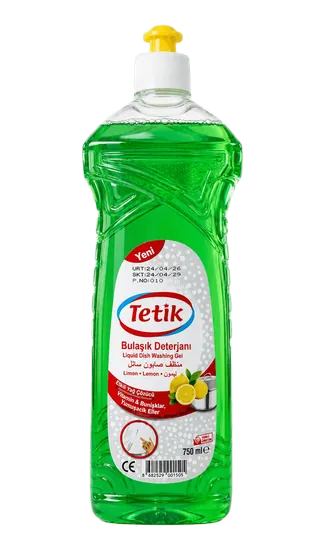
In cafés and restaurants, water bottles, sauce bottles and oil cruets are used every day; emptying them at the end of the day, washing them with dishwashing liquid, rinsing thoroughly and drying them upside down keeps the routine orderly. Where hygiene and disinfection are required, follow your business's food safety procedure. For a product list, see the guide restaurant cleaning supplies. TETİK dishwashing liquid is produced in 750 g, 5 kg, 20 kg and 30 kg and TETİK gel dish detergent in 200 g, 10 kg and 35 kg packs; for bulk purchases you can request a quote.