Guide · Product information and safe use ·
How to Use Silicone Surface Cleaner
Silicone surface cleaner goes on surfaces such as furniture, glass and metal, not on the floor: spray it, wipe, then buff with a dry cloth. It must not be used on floors, stairs or surfaces that are walked on, because it can make them slippery. This guide covers correct use, the surfaces to stay away from and common mistakes.
How do you use silicone surface cleaner?
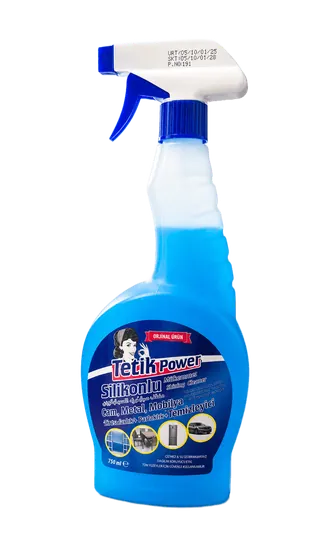
Spray the product onto the surface or a clean cloth, wipe the surface clean, then buff with a dry cloth. TETİK Power Silicone Surface Cleaner is used this way from its trigger spray bottle; it is not a floor cleaner to add to a bucket of water.
Warning: Do not use on floors, stairs or surfaces that are walked on, as it can make them slippery. Also wipe up straight away any product that drips onto the floor while you work.
What is silicone cleaner, and how does it differ from a floor cleaner?
TETİK Power Silicone Surface Cleaner is a silicone-enriched surface cleaner that adds shine while cleaning surfaces. Its label describes it as a "silicone cleaner for glass, metal and furniture", and it comes in a 750 ml trigger spray bottle.
Silicone products generally leave a thin layer on the surface. On furniture that layer gives a glossy look; underfoot it means a risk of slipping. Floor cleaners, by contrast, are added to a bucket of water and applied with a mop; the steps are in the guide how to use a surface cleaner. The two product groups are not interchangeable.
Where is silicone cleaner used?
The usage areas and label description of TETİK Power Silicone Surface Cleaner cover these surfaces:
- Furniture and cabinet surfaces: For wiping and buffing once the dust has been removed.
- Plastic and laminate surfaces: Wipeable plastic parts and laminate finishes on furniture; do not use on laminate floors.
- Office desks: Clear the desk, spray the product onto a cloth and wipe with it.
- Car interior plastics: Use on plastic parts only; the places to avoid are listed below. For the whole interior: how to clean a car interior.
- Glass: Included in the label description; use a small amount and buff with a dry cloth. For cleaning windows, mirrors and shop windows: how to use glass cleaner.
- Metal: Included in the label description. For stainless surfaces such as lift and door panels: how to clean stainless steel.
Can silicone cleaner be used on floors?
No. Whether the floor is tile, marble, parquet, laminate or PVC, do not spray the product on it, add it to mop water or use it to make the floor shine. A silicone product can make floors, stairs and surfaces that are walked on slippery. For floor cleaning see how to use a surface cleaner, and for steps see how to clean stairs.
Where should silicone cleaner not be used?
- Surfaces that are walked on: Steps, thresholds, ramps, shower trays and bath bases.
- Surfaces people hold on to: Banisters, railings and grab handles; hands can slip.
- Car parts where slipping is dangerous: Pedals, floor mats, steering wheel and gear knob.
- Dashboard: A glossy film can reflect in the windscreen in sunlight and impair visibility: how to clean a car dashboard.
- Car windows: Silicone product residue can leave an oily look on the glass when the wipers run: how to clean car windows.
- Fabric and leather: Silicone product that gets on seats and upholstery can leave marks.
- Screens: Do not spray onto TV, computer or phone screens; follow the manufacturer's instructions.
- Food-contact surfaces: Do not use on chopping boards, kitchen worktops, plates or glasses.
How do you apply silicone cleaner, step by step?
- Read the label: Follow the label instructions for amount and timing.
- Remove the dust: Wipe the surface with a dry, soft cloth; dust mixed with the product leaves marks.
- Test a small area: If this is the first use on that surface, try it on a small hidden area.
- Spray: Spray the product onto the surface or a clean cloth. On small areas and close to the floor, spraying onto the cloth gives more control.
- Wipe: Wipe the surface clean; as the cloth gets dirty, switch to a clean side.
- Buff: Buff the surface with a dry cloth.
- Check the floor: If any product has dripped nearby, wipe it up without stepping on it.
How do you use silicone cleaner on furniture?
- Laminate and veneered furniture: On office desks and cabinet doors, spray the product onto a cloth, wipe and buff with a dry cloth; keep liquid out of the edge joints.
- Polished and varnished wood: First test a small hidden area, then wipe with a small amount of product and buff with a dry cloth.
- Raw, oiled or unfinished wood: Try a small spot before treating the whole surface; for regular cleaning of the wood, follow the steps in how to clean wooden furniture.
- Upholstered chairs and armchairs: When wiping wooden or plastic parts, spray the product onto a cloth and keep it off the fabric and leather.
Common mistakes
- Using it like a floor cleaner: A silicone product does not belong in the bucket or on the floor.
- Leaving drips on the floor: Product that drips onto the floor while you wipe furniture can also make it slippery.
- Spraying too much: The excess can leave marks and a blotchy look on the surface; start with a small amount.
- Skipping the dry cloth: Buffing is the last step; if you skip it, marks can remain on the surface.
- Applying to a dusty surface: Remove the dust first, and do not work with a dirty cloth.
- Trying it on heavy grease: Burnt-on grease on hobs and cooker hoods needs a degreaser.
What should silicone cleaner not be mixed with?
Do not mix it with bleach, limescale remover, hydrochloric acid or any other cleaning product; some mixtures release harmful gases, and mixing does not make cleaning more effective. Do not fill the bottle with another product, and do not add water unless the label says so. If you have used another product on the same surface, first wipe the surface with a clean damp cloth. For details: can cleaning products be mixed.
Safe use and storage
- Read the instructions and warnings on the pack label before use; keep out of the reach of children.
- Do not squeeze the trigger while pointing it at your face or at another person; in enclosed spaces, open a window.
- If it gets into the eyes, rinse with plenty of water; if irritation persists, get medical advice.
- If swallowed, do not induce vomiting; rinse the mouth with water and call a poison centre (in Turkey: UZEM, 114).
- Store the product in its own bottle, away from food; do not transfer it to another container.
For businesses
TETİK Power Silicone Surface Cleaner comes in a 750 ml trigger spray bottle, with 12 units per case. Businesses where office desks, furniture, plastic and laminate surfaces are wiped often can buy by the case.
Tell cleaning staff clearly that this product must not be applied to floors, and keep the bottle separate from floor cleaners. Other products for floors and general surface cleaning are on the surface cleaners page; for bulk orders, you can request a quote from the wholesale cleaning products page.