Guide · Bathroom, toilet and limescale ·
How Is Limescale Remover Made?
In limescale remover production, the main issue is less the mixing than working safely with strong acid. This article outlines the process from raw material intake to labelling; it gives no recipe or ratios. For the general production flow, see how detergent is made.
How is limescale remover made?
Limescale remover is usually made by adding acidic ingredients to water under controlled conditions, mixing them with auxiliaries, checking pH and appearance, and filling it into acid-resistant packaging. The result is a strongly acidic product that dissolves limescale, rust and scale. Occupational safety is therefore an integral part of the production steps.
What is limescale remover made of?
- Water: the main component of the mix; the acid is added into this water.
- Acidic ingredients: the main active that dissolves limescale and rust; different acids may be used depending on the product.
- Auxiliary ingredients: depending on the product, may be used to help it cling to surfaces and make it easier to use.
- Acid and auxiliary ratios are not given in this guide; you can find the product's hazard information in the safety data sheets.
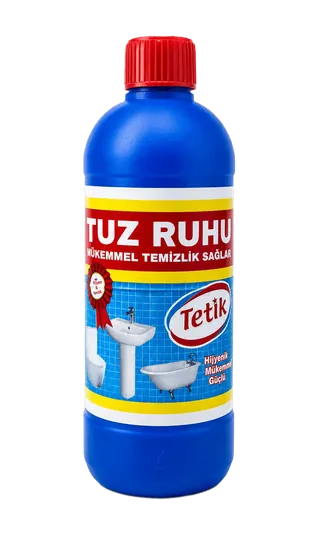
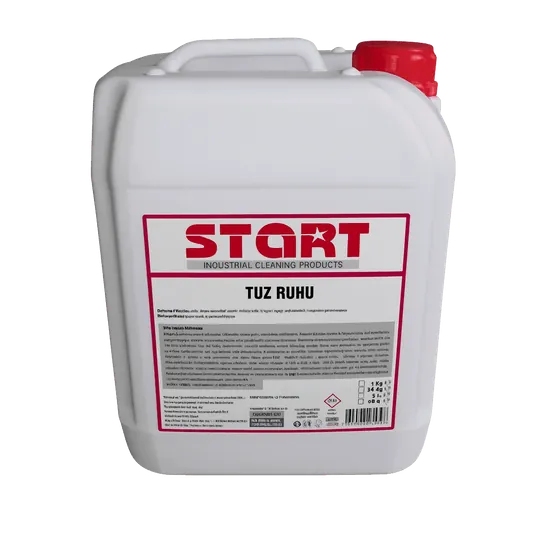
- Tuz ruhu is a separate product: a hydrochloric acid solution. For the differences: are limescale remover and tuz ruhu the same.
General steps in limescale remover production
- Raw material intake: incoming acid is usually recorded and its packaging and label are checked; it is placed in an area separate from chlorinated and alkaline substances.
- Weighing: raw materials are weighed for the batch size, wearing protective equipment.
- Mixing: as a general rule, water goes into the tank first and the acid is added to it slowly. Water is never poured onto acid, because of the risk of heat and splashing.
- Auxiliary ingredients: if used, they are added in order until the mix is homogeneous.
- Checks: pH and appearance are usually checked on the batch before filling; a non-conforming batch should not go to the filling line.
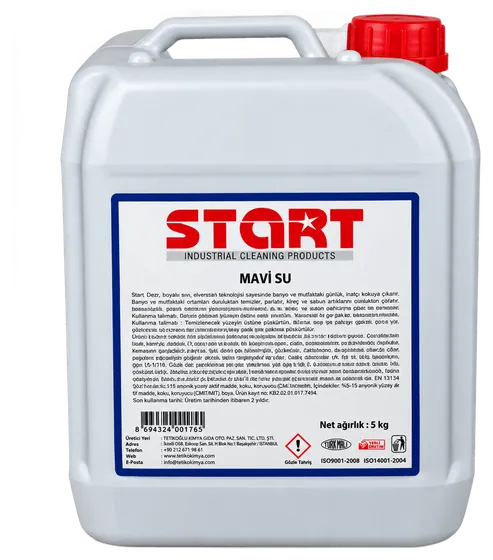
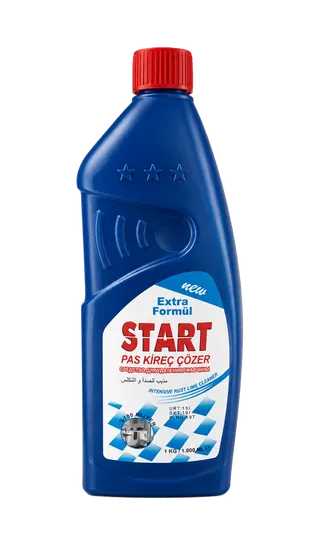
- Filling: the product is usually filled into acid-resistant packaging with weight or volume control; START Limescale & Rust Remover comes in 1 kg, 5 kg, 20 kg and 30 kg packs.
- Capping and labelling: the cap is tightened, the label with hazard symbols is applied and small packs go into cases.
Occupational safety in acidic product manufacturing
- Protective equipment: acid-resistant gloves, safety goggles and suitable workwear are required; the product causes severe skin burns and eye damage.
- Ventilation: the product may cause respiratory irritation; weighing, mixing and filling areas are well ventilated.
- Keeping away from chlorinated products: acid mixed with bleach releases toxic chlorine gas. Acidic and chlorinated raw materials and products should not be kept in the same area.
- Substances to avoid: according to the SDS, the product must not contact metals, strong bases, strong oxidising agents or peroxides.
- Equipment: because acid corrodes metals, tanks, pipes, pumps and filling parts should be made of acid-resistant material.
- Line cleaning: before switching to an alkaline or chlorinated product, no acid residue should remain in the tank and filling parts; this usually takes a thorough wash with plenty of water.
- In case of contact: if it touches skin or eyes, rinse immediately with plenty of water for at least 15 minutes and get medical help.
Quality control points specific to limescale remover
- pH: determines the product's strength and safety information. The SDS gives the pH of the START Limescale & Rust Remover as 1–2.
- Appearance and odour: the SDS describes the START Limescale & Rust Remover as a clear liquid with a sharp odour; cloudiness or sediment may call for the batch to be re-examined.
- Density: the SDS gives 1.002 g/cm³ for the START Limescale & Rust Remover.
- Leak-tightness: cap and packaging are usually checked so that the acidic product does not leak in transit.
- Records: the date, number and measurements of each batch are usually recorded.
- Criteria you can use to assess a manufacturer are in what to consider when choosing a cleaning products manufacturer.
Filling and packaging
- 1 kg: 16 per case.
- 5 kg: 4 per case.
- 20 kg and 30 kg: single cans; for hotels, hospitals, schools, shopping centres and cleaning companies.
- Packaging and cap must be acid-resistant. The product is stored tightly closed and upright, in a cool, well-ventilated place away from sunlight and excessive heat, and apart from food and drink.
- Product codes and case details are on the START Limescale & Rust Remover page.
Labelling and safety data sheet (SDS)
- Hazard information: according to the SDS, the START Limescale & Rust Remover carries the signal word “Danger” and the GHS05 and GHS07 pictograms; statements H314, H318 and H335 apply. Its transport class is 8.
- Mixing warning: it is not mixed with chlorinated products such as bleach or with alkaline products: can cleaning products be mixed.
- Surface warning: not used on marble, travertine and other natural stone, enamel, chrome-plated taps, or metal surfaces such as aluminium, copper and brass.
- Use: waiting time and amount are on the label. For the steps: how to use limescale remover.
- For what the sheet contains: what is a safety data sheet.
Our acidic products, each under its own name
- START Limescale & Rust Remover: for limescale, rust and scale on bathroom, kitchen and industrial surfaces; 1, 5, 20 and 30 kg.
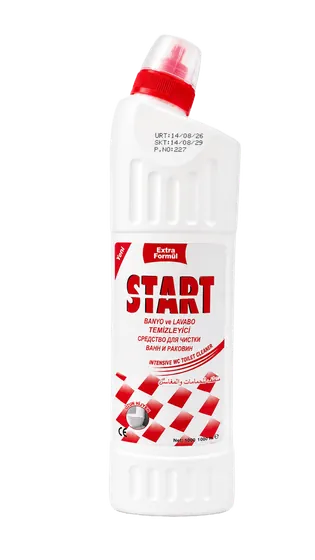
- START Bathroom & Toilet Cleaner: for dirt and limescale on toilets, urinals and sinks; 1, 5, 20 and 30 kg.
- TETİK Hydrochloric Acid Cleaner (Tuz Ruhu): 600 g and 2.5 kg; START Hydrochloric Acid Cleaner (Tuz Ruhu): 5 kg and 30 kg.
- START Dishwasher Descaler / Limescale Inhibitor: for dishwashers; 5 kg and 30 kg.
- Each product is made for its own area of use and is used according to the instructions on its label.
Certificates
- TSE certificate (limescale & rust): Our START Limescale & Rust Remover is TSE-certified to TS 13414 (limescale, rust and scale remover).
- Certificate details are on the documents and certificates page.
Can limescale remover be made at home?
Not recommended. Concentrated acid can cause severe burns to skin and eyes, and its vapour can irritate the airways; mixing in the wrong order causes splashing. Protective equipment, pH control and suitable packaging cannot be provided at home. Use a labelled ready-made product and follow the label instructions.
Our own production plant and supply
We make the START Limescale & Rust Remover at our plant in Istanbul İkitelli OSB: 500 m² of production area and a capacity of 8,895 tons a year. Our head office and 2,000 m² warehouse are in Başakşehir Kayabaşı.
Tetikoğlu Kimya is a bathroom cleaner and limescale remover manufacturer; we introduce our plant on the production page.
For bulk purchases, see wholesale cleaning products; for selling in your region, see dealership and distribution; you can also request a quote stating the product and pack size.