Guide · Kitchen and dishes
What Else Can Dishwasher Detergent Be Used For? Sofas, Glass, Carpets and Tiles
Dishwasher detergent is used only in a dishwasher. We do not recommend using it to clean sofas, carpets, glass, tiles, toilets or kitchen cabinets, or to unclog sinks: it is a strong product made to work with hot, pressurised water in a machine and to be rinsed away with plenty of water, and it is not suitable for contact with skin. In this guide we answer each usage question one by one and explain, as the manufacturer, which product is right for each job.
What else can dishwasher detergent be used for?
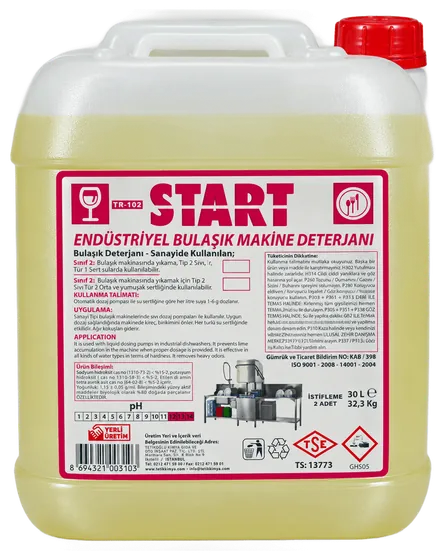
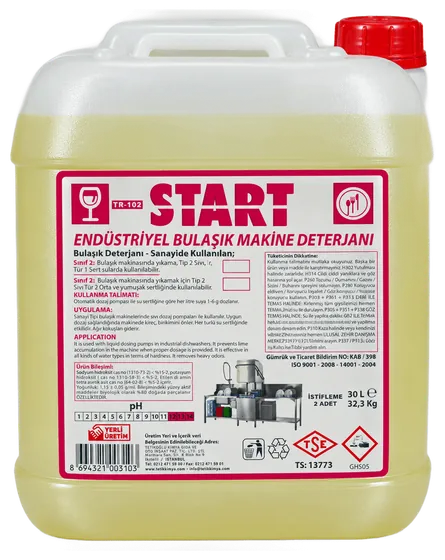
Dishwasher detergent is not made to be used anywhere other than a dishwasher. Our label defines START Liquid Dishwasher Detergent as an industrial dishwasher detergent; its area of use is commercial dishwashers, and it is fed by a liquid dosing pump. Its label also states that it must not be mixed with any other product or substance.
Tips circulate online about using dishwasher detergent to wipe sofas, polish glass or unclog sinks. None of these uses appears on the product label, and their results are not covered by the manufacturer. Below we explain why each one is inadvisable and which product is made for that job.
- Sofas and carpets: not recommended; use carpet shampoo.
- Glass and mirrors: not recommended; use glass cleaner.
- Tiles and floors: not recommended; use a surface cleaner, and a limescale and rust remover for limescale.
- Toilets: not recommended; use a bathroom and toilet cleaner.
- Kitchen cabinets: not recommended; use a surface cleaner or a wood surface cleaner.
- Unclogging sinks: not recommended; dishwasher detergent is not a drain opener.
- Cars: not recommended; use car shampoo.
- Washing dishes and hands by hand: not used; use hand dishwashing liquid and liquid hand soap.
Why is dishwasher detergent used only in the machine?
Dishwasher detergent is made for the machine's working conditions: hot water, pressurised spraying and then rinsing with plenty of water. None of these three conditions exists when you clean by hand; the product stays on the surface and comes into contact with skin.
- It is strong and alkaline: dishwasher detergents are much more strongly alkaline than cleaners used by hand; they must not come into contact with skin or eyes. Wear gloves when handling the product.
- It does not foam: it is made so as not to cause foam problems in the machine; it does not work like products made for wiping and scrubbing by hand.
- It is made to be rinsed away: the machine removes the product with plenty of water. Product left in fabric, grout or wood cannot be rinsed out.
- It is dosed: in an industrial machine, a pump measures the product. A mixture made by hand in a bucket has no measured dose.
- It is not suited to delicate surfaces: aluminium, painted and lacquered surfaces, wood, fabric and natural stone are not suitable for contact with this product.
Can you clean a sofa with dishwasher detergent?
No, we do not recommend it. Dishwasher detergent cannot be rinsed out of fabric; product left in the fabric can fade the colour, stiffens the texture and comes into contact with the skin of anyone who sits on the sofa. Product that soaks into the sofa's foam cannot be removed at all.
For a sofa, use a product suitable for cleaning fabric. Our label defines TETİK Carpet Shampoo for cleaning carpets and sofas; the application steps are in our guide how to clean a sofa. As with any product, test it first on a small, hidden area.
Can you clean a carpet with dishwasher detergent?
No. The problem is the same with carpets: the product stays at the base of the pile, cannot be rinsed out, can fade the colour, and comes into contact with bare feet and crawling children. The residue also attracts dust, so the carpet soon gets dirty again.
For carpets, use carpet shampoo; application by hand and by machine is covered in our guide how to use carpet shampoo.
Can you clean glass and mirrors with dishwasher detergent?
No. Dishwasher detergent leaves streaks and a film on glass; because it does not foam and does not dry quickly, it cannot be wiped to a shine. Product that runs onto aluminium or painted frames and window sills can darken or dull the surface.
For glass and mirrors, use our glass cleaners; they are made to be sprayed on and wiped with a dry cloth without leaving streaks. The answer to whether you can clean glass with rinse aid is in our guide how to use dishwasher rinse aid.
Can you clean tiles and toilets with dishwasher detergent?
We do not recommend it. Glazed tiles and toilet bowls are durable surfaces; the problem is not the surface but the way it is used. The product is applied by hand, splashes, leaves a slippery residue on the floor and needs rinsing with plenty of water.
Tiles and floors
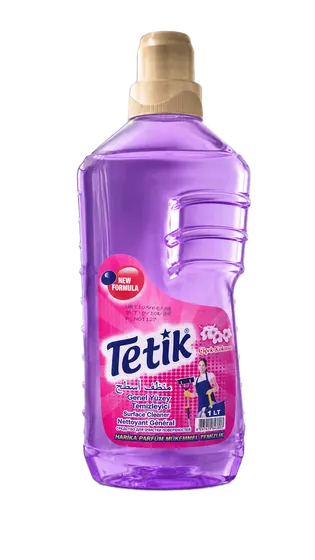
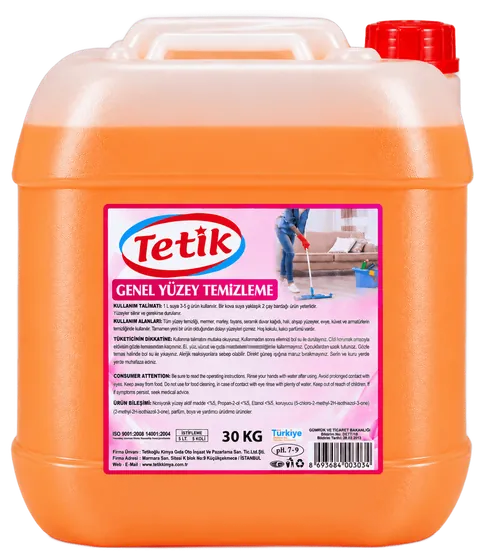
For everyday dirt, use a surface cleaner: add it to a bucket of water and apply with a mop. White marks on tiles are limescale; limescale is dissolved by an acidic product, not an alkaline one. For this, use START Limescale & Rust Remover.
Toilets
The yellow ring and hard deposits in a toilet are limescale and urine scale; dishwasher detergent does not dissolve them. For toilets, use START Bathroom & Toilet Cleaner. Do not use dishwasher detergent in the toilet together with another cleaner; products must not be mixed.
Can you clean kitchen cabinets with dishwasher detergent?
No. Kitchen cabinet surfaces are usually painted, lacquered, laminate or wood veneer; a strongly alkaline product can dull these surfaces and fade their colour. Aluminium handles and profiles darken.
For greasy dirt on cabinet doors, use a near-neutral surface cleaner applied with a damp cloth. For wooden cabinets, choose START Wood Surface Cleaner; our label lists kitchen cabinets among its areas of use. If the burnt-on grease around the hob belongs to the hob rather than the cabinet, START Degreaser is used only on the surfaces listed on its label.
Can you unclog a sink with dishwasher detergent?
No. Dishwasher detergent is not a drain opener; it is not made to clear blockages in pipes. Product poured down the drain and followed by hot water can splash, and it collects in a blocked sink where it comes into contact with hands and eyes.
A blockage is cleared mechanically, with a plunger or a drain snake, or by a plumber. Our product range does not include a drain opener; for bad odours from drains we produce an enzyme odour remover, which is also used for odour, not for clearing blockages.
Can you wash a car with dishwasher detergent?
No. A strongly alkaline product strips the protective wax from the car's paint, can dull the paint, and can darken aluminium wheels and trims. For washing a vehicle, use START Car Shampoo; the steps are in our guide how to use car shampoo.
Can it be used for laundry, washing dishes by hand or washing hands?
- Laundry: not used. Details are in our guide can you wash clothes with dishwashing liquid.
- Washing dishes by hand: not used. Dishwasher detergent is not suitable for washing by hand; for hand washing, our dishwashing liquids are used.
- Hands and body: never used. For washing hands, liquid hand soap is used.
Tablets, powder, gel and liquid: does this apply to all of them?
Yes. Whatever its form, dishwasher detergent is made for the machine. Household tablets and powders are made for the dispenser, industrial liquid detergent for the dosing pump; none of their labels mention sofas, glass or drains.
The way to find out where a product can be used is to read its label. What a product will do to a surface that is not on its label has not been tested.
So where is dishwasher detergent actually used?
Our dishwasher detergent is used in the wash stage of industrial dishwashers and glass washers. The container is connected to the machine's detergent dosing pump; the machine draws the product itself. In the rinse stage, a separate product, rinse aid, is used.
- Industrial dishwashers in restaurant, hotel and café kitchens.
- Canteen, hospital, school and dormitory kitchens.
- Glass washers in cafés and bars.
- Usage steps: how to use dishwasher detergent.
Which of our products for which cleaning job?
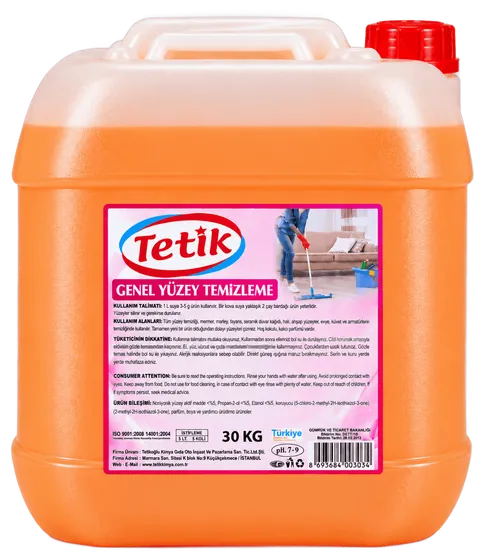
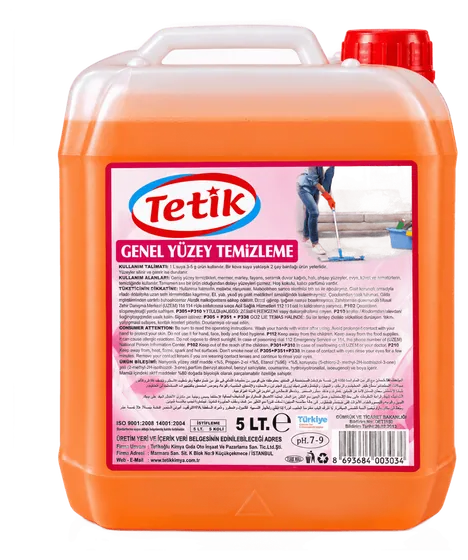
- Sofas and carpets: TETİK Carpet Shampoo.
- Glass and mirrors: glass cleaners.
- Floors and tiles: surface cleaners.
- Limescale and rust: START Limescale & Rust Remover.
- Toilets and sinks: START Bathroom & Toilet Cleaner.
- Burnt-on grease in ovens and on hobs: START Degreaser.
- Wooden cabinets and parquet: START Wood Surface Cleaner.
- Vehicles: START Car Shampoo.
- Washing dishes by hand: dishwashing liquids.
Our dishwasher detergents and their packaging
- START Liquid Dishwasher Detergent: 30 KG, sold per unit.
- START Liquid Dishwasher Detergent — Formül: 20 KG, sold per unit.
- For rinsing, START Liquid Dishwasher Rinse Aid is a separate product.
- These products are for professional machines; in a domestic machine, use a household detergent made for that machine.
For restaurants, hotels and cleaning companies
In businesses, dishwasher detergent being used for other jobs usually happens because the container is at hand: if there is no separate product for the floor or the counter, staff use whatever they have. The way to prevent this is to keep the right product for each job and to keep containers separate with their labels.
To source dishwasher detergent, rinse aid, surface cleaners and bathroom products in a single order, see our wholesale cleaning products page or request a quote; prices and terms are given in the quote.