Guide · Kitchen and dishes
Why Does a Dishwasher Foam, and What Should You Do If It Does?
A dishwasher usually foams because hand dishwashing liquid has got into it: either the liquid was put in the dispenser, or foam left over from rinsing by hand was carried into the machine with the dishes. Too much detergent, rinse aid that has spilled or is set too high, and, in industrial machines, wrongly connected hoses are the other causes. In this guide we explain, as a detergent manufacturer, what to do step by step when the machine foams, the causes in domestic and industrial machines, and how to prevent foam.
Why does a dishwasher foam?
A dishwasher foams when a high-foaming product gets inside it. The most common cause is hand dishwashing liquid: it is put in the dispenser when the dishwasher detergent runs out, or the dishes are scrubbed with a soapy sponge before going into the machine and loaded without rinsing. Liquid soap and laundry detergent have the same effect.
Dishwasher detergent is formulated so that it does not cause foam problems in the machine, because the machine washes dishes with pressurised water, not with foam. Foam lowers the pressure of the spray arms, confuses the sensors and overflows from the door.
- Hand dishwashing liquid, liquid soap or laundry detergent: put in the dispenser or carried in with the dishes.
- Residue from pre-washing by hand: dishes scrubbed with detergent and loaded without rinsing.
- Too much detergent: increasing the dose causes foam and white residue, especially in soft water.
- Rinse aid: rinse aid that spilled into the machine while filling, or that is set too high.
- Wrong product or a mixture: detergent added on top of another product left in the dispenser.
- Protein-heavy soil: when leftovers such as egg, milk and dough are not scraped off, the wash water can foam.
- In industrial machines: swapped detergent and rinse aid hoses, a high pump setting and tank water that has not been changed for a long time.
What to do if your dishwasher foams: step by step
If the machine foams, stop the programme, remove the foam and soapy water, clean the dispenser and filter, and run the machine without detergent until the foam is gone. Continuing the same programme with foam increases the risk of overflow and breakdown.
- Stop the programme: cancel the programme and wait for the machine to drain. Do not open the door straight away; there is hot water and steam inside.
- Wipe up water on the floor: overflowing soapy water is slippery; dry the area in front of and under the machine. If water has reached under the machine or the socket, unplug it.
- Remove the foam: open the door carefully; scoop out the foam and the water left at the bottom with a container and a cloth.
- Take out and rinse the dishes: remove the dishes and rinse the detergent off under the tap.
- Clean the dispenser and filter: rinse any product left in the detergent dispenser with water; remove the filter and wash it under running water.
- Run it without detergent: run the machine empty and without detergent on a short programme or a pre-wash. Repeat if the foam persists.
- Follow the machine manual: to remove foam, follow the method in the machine manufacturer's manual; do not put anything other than detergent into the machine.
- Wash again: once the foam is gone, wash the dishes again using dishwasher detergent only.
- If the fault persists: if the machine does not drain, shows an error code or leaks water from underneath, consult an authorised service centre.
Why does hand dishwashing liquid foam in a dishwasher?
Hand dishwashing liquid is made to produce plenty of foam on the sponge and in the washing-up water; in a dishwasher, even a small amount fills the tub with foam. Because the machine's pump constantly recirculates the water, the foam multiplies quickly and overflows through the door seal.
That is why the two products are not interchangeable: hand dishwashing liquid is not suitable for the machine, and dishwasher detergent is not suitable for washing by hand. We explain how dishwasher detergent differs from hand dishwashing liquid in our guide what is dishwasher detergent.
Why does it foam even though I use dishwasher detergent?
Foam seen while using dishwasher detergent is usually caused by hand detergent carried in with the dishes, too large a dose, or rinse aid.
Foam from pre-washing by hand
There is no need to scrub dishes with a soapy sponge before loading them. Scraping off food leftovers is enough; if you want to pre-clean, rinse the dishes with water only. Dishes scrubbed with detergent should be rinsed before they go into the machine; even the foam from a sponge multiplies in the machine.
Too much detergent and soft water
A larger dose does not clean better; too much detergent causes foam, leaves residue in the rinse water and triggers a foam error in some machines. In soft water, the same dose foams more. Set the dose according to the detergent label and the machine manual.
Foam from rinse aid
If product that spills from the dispenser while filling rinse aid is not wiped up, it foams in the first wash. If the dispenser lid is not fully closed or the rinse aid setting is higher than needed, you will see foam during rinsing and a film with a blue-purple sheen on glasses. Wipe up spilled rinse aid with a damp cloth, close the lid and lower the setting according to the machine manual. The filling steps are in our guide how to use dishwasher rinse aid.
Another product left in the dispenser
If there is residue of another cleaning product in the detergent dispenser or at the bottom of the machine, it can foam together with the new detergent. Dishwasher detergent is not mixed with any other product; rinse the dispenser with water every time you change products.
Why does an industrial dishwasher foam?
The most common cause of foam in an industrial dishwasher is hand detergent from the pre-wash sink: dishes are soaked in soapy water, racked without rinsing, and the foam is carried into the wash tank. The second cause is the setting of the detergent and rinse aid pumps, or hoses inserted into the wrong container.
- Pre-wash sink: remove hand detergent from the dishes before racking them; use pressurised water for pre-washing.
- Wrong product: do not put hand dishwashing liquid into the wash tank or the dosing line. Only dishwasher detergent and rinse aid are used in the machine.
- Hoses: the detergent hose must be in the detergent container and the rinse aid hose in the rinse aid container. When changing containers, connect the hoses by checking the product name on the label.
- Pump setting: too much detergent causes foam in the tank and white residue on dishes; too much rinse aid causes foam during rinsing and film on glasses. The setting is adjusted by the machine's authorised service or technical staff.
- Tank water: tank water with a growing soil load is prone to foaming; change the water at the intervals recommended by the machine manufacturer and wash the filters and strainers.
- Scraping: egg, milk and dough leftovers are scraped off before racking.
- Water temperature: if the machine does not reach its wash and rinse temperatures, foam can increase and washing results suffer; in that case consult the authorised service.
If an industrial machine foams
Stop the machine, drain the wash tank, wash the filters and strainers, and refill the tank with clean water. Check that the hoses are in the right containers. If the foam recurs, call the machine's authorised service about the pump setting and water temperature; show the product labels to the technician.
Glass washers
The causes of foam in glass washers are the same, with the addition of drink residue left in glasses. Glasses are emptied and rinsed with water before racking. Product selection is covered in our guide glass washer detergent and rinse aid.
Does foam damage the machine?
A machine that foams once is usually not damaged; however, continuing to run it with foam causes problems. Because foam lowers the spray pressure, the dishes are not washed, the pump draws in air, and overflowing water reaches under the machine and the floor.
Most domestic machines have an anti-flood safety system; when water reaches the base tray, the machine stops and shows an error. In that case, do not open up the machine yourself; unplug it and consult an authorised service centre.
If your dishwasher leaves foam: suds left on dishes and at the bottom
If foam remains at the bottom or on the dishes when the programme ends, the machine cannot rinse the product away completely. The cause may be too much detergent or rinse aid, a clogged filter, incomplete draining or a short programme.
- Check the dose: reduce the detergent and rinse aid to the amount on the label and in the manual.
- Wash the filter: a clogged filter slows draining; soapy water stays at the bottom.
- Check the spray arms: blocked holes weaken rinsing.
- Change the programme: very short programmes may not rinse enough with heavy soiling.
- If the machine does not wash cleanly, the other causes are in our guide why a dishwasher does not wash cleanly.
To prevent foam
- Put only detergent and rinse aid made for dishwashers into the machine.
- When dishwasher detergent runs out, do not use hand dishwashing liquid, liquid soap or laundry detergent instead; wash the dishes by hand.
- Load the dishes by scraping them only, without scrubbing them with detergent.
- Do not increase the detergent or rinse aid dose.
- Wipe up any spilled product when filling rinse aid, and close the lid fully.
- Store hand dishwashing liquid and dishwasher detergent separately in their labelled packaging; do not mix up similar containers.
- In industrial machines, mark the hoses “detergent” and “rinse aid”.
Our dishwasher detergents and rinse aids
We produce liquid dishwasher detergent and rinse aid for industrial dishwashers, and dishwashing liquid for washing by hand. The two groups are separate products and are not interchangeable.
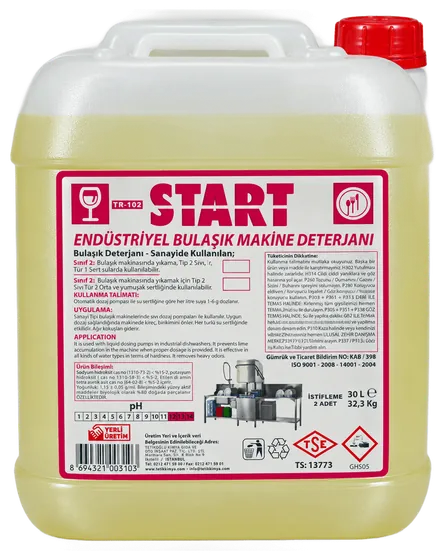
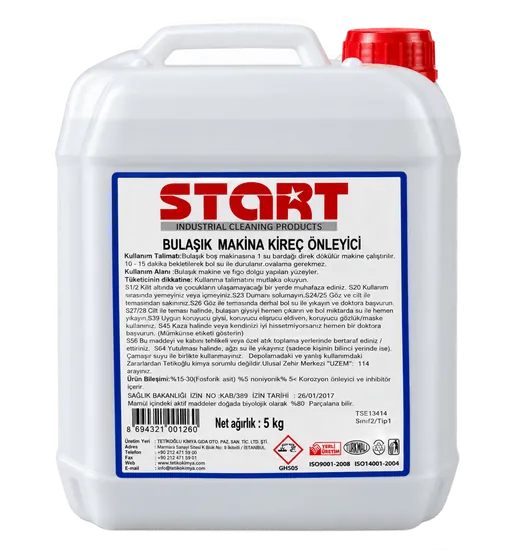
- START Liquid Dishwasher Detergent: 30 KG. Our label defines it as an industrial dishwasher detergent; it is used in commercial machines with a liquid dosing pump.
- START Liquid Dishwasher Detergent — Formül: 20 KG.
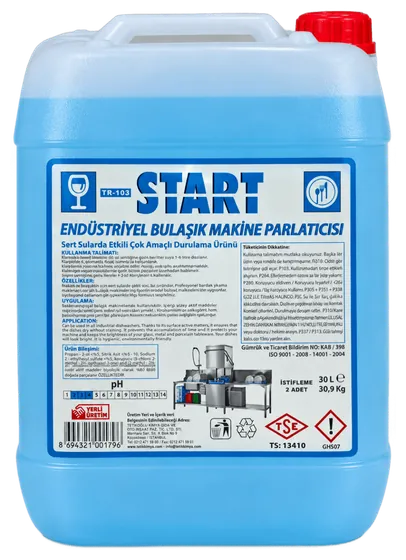
- START Liquid Dishwasher Rinse Aid: 30 KG. Used in the rinse stage.
- START Liquid Dishwasher Rinse Aid — Formül: 20 KG.
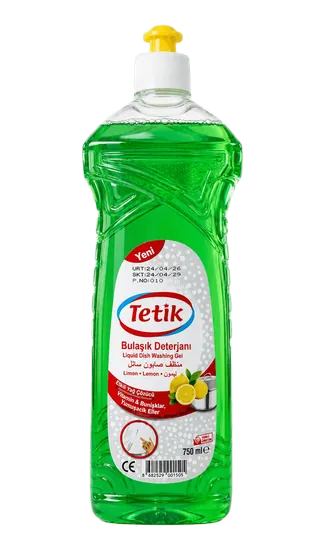
- For washing by hand, our dishwashing liquids are a separate product; they are not put into the machine.
- These products are for professional machines; in a domestic machine, use a household detergent made for that machine.
For restaurants, hotels and canteens
The lasting solution to foam problems in the kitchen is to keep products separate and inform staff: the hand detergent used at the pre-wash sink and the products on the machine's dosing line should be kept in different places, and containers should be recognisable by their labels. Daily machine care and using the products together are covered in our guide using industrial dishwasher detergent.
To source dishwasher detergent, rinse aid and hand dishwashing liquid together, see our industrial dishwasher products or request a quote; prices and terms are given in the quote.