Guide · Stain removal ·
How to Remove Crayon Stains
Crayons are children's favourite colouring tools, but when they get on clothes, carpets, sofas, walls and tables they leave a stubborn stain. Wax crayons and oil pastels are made of wax and oil with colour pigment; so, as with candle wax, the crayon itself is lifted off first and then the remaining coloured, greasy mark is cleaned. This guide explains how to remove crayon stains from clothes, carpets, sofas, walls and tables and what to do when crayon goes through the washing machine with the laundry.
First steps
- Remove the excess: gently scrape the crayon off the fabric or surface with a blunt knife, a plastic spatula or an old card.
- Do not rub: crayon softens as it is rubbed and spreads the stain.
- Use heat with care: do not put the laundry in the tumble dryer until the stain is gone; heat melts the crayon and spreads it into the fabric.
- Read the label: find out the fabric's ironing temperature and washing instructions from the label.
How to get crayon out of clothes
- Remove the pieces of crayon from the fabric.
- If the fabric can be ironed, place several layers of white kitchen paper under and over the stain; set the iron to the lowest heat the label allows and to no steam, press briefly over the paper to draw the crayon into it, and change the paper as it gets dirty.
- Apply a stain remover such as İLK BOR Leke Sihirbazı to the remaining coloured, greasy mark and leave it for the time on the label.
- On garments, TETİK Kar Aspirin, whose label lists use on clothing, can also be applied to the stain; test on a hidden spot first.
- Wash the garment on the programme on the fabric label with detergent for coloureds or detergent for whites.
- Check the stain before drying; if a mark remains, repeat the pre-treatment.
- For the iron method of lifting wax: how to remove candle wax.
Crayon that went through the wash
A crayon forgotten in a pocket can melt in the washing machine and leave coloured stains on many items of laundry. Do not put these items in the tumble dryer; pre-treat the stain on each item separately with stain remover and rewash on the programme on the fabric label. If crayon residue is left on the machine's drum or tub, clean the machine according to the manufacturer's manual (how to clean a washing machine). If crayon got into the tumble dryer, clean the drum and filter according to the manufacturer's instructions; do not dry other laundry while there is crayon residue in the drum (how to clean a tumble dryer).
How to get crayon out of carpet
- Scrape the crayon off the carpet with a plastic spatula and vacuum up the crumbs; do not pull the carpet fibres.
- Place white kitchen paper over the remaining crayon and press briefly with a steam-free iron at the lowest heat to draw the crayon into the paper; on synthetic carpets, test on a hidden corner first.
- For any remaining coloured mark, apply a small amount of a carpet-safe stain remover such as TETİK Binbir Stain Remover and blot it off with a clean cloth.
- Do not overwet the carpet and leave it to dry thoroughly (how to use carpet shampoo).
Crayon stains on sofas
Lift the crayon off a fabric sofa with a blunt edge; if the fabric can be ironed, remove the remaining crayon with kitchen paper and a low-heat iron. On the remaining mark, apply TETİK Kar Aspirin to a clean cloth and press it onto the mark; the Kar Aspirin label lists use on sofas and upholstery. Test on a hidden area first. Do not use an iron on leather, faux leather, velvet or synthetic upholstery, and follow the manufacturer's recommendation (how to clean a sofa).
How to remove crayon from walls
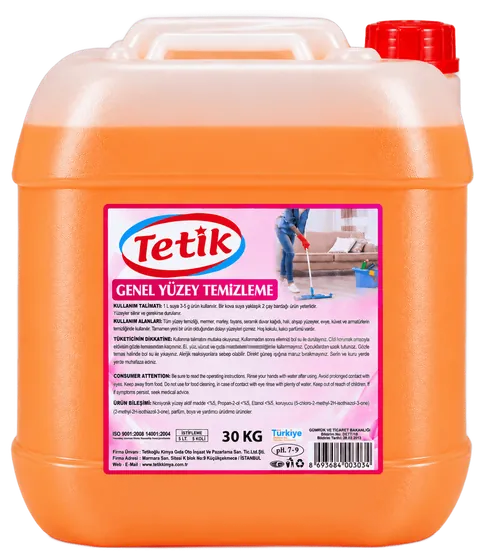
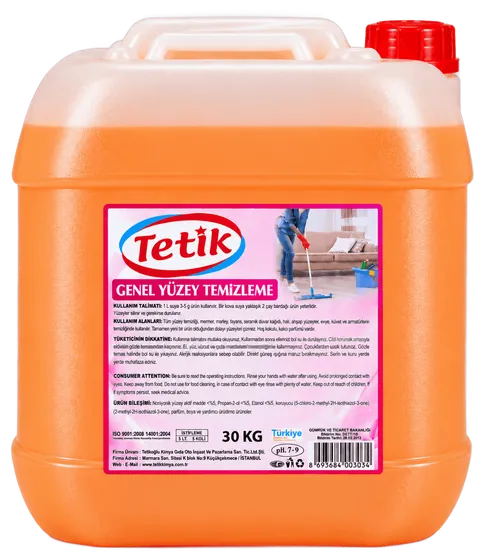
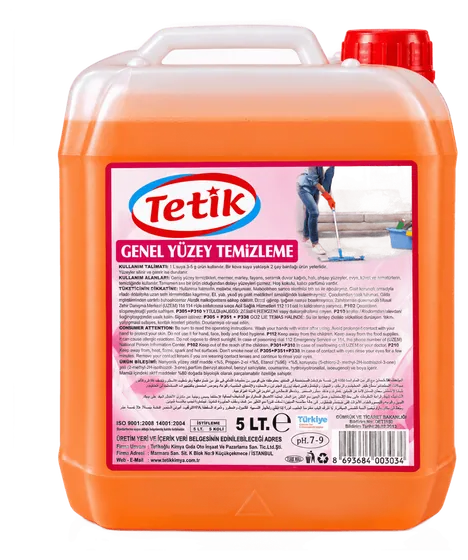
First wipe the crayon on the wall gently with a dry cloth. For marks that will not come off, add START all-purpose surface cleaner to lukewarm water in the amount on the label and wipe without pressing, using a well-wrung soft cloth, then wipe with a clean damp cloth. According to its safety data sheet, our START all-purpose surface cleaner has a pH of 7–8. Always test on a hidden corner of the wall first; washable paints withstand wiping, while on matt and non-washable paints a mark may remain or the paint may go dull. Do not use abrasive cream, hard sponges or solvents. For cleaning walls, see the guide how to clean walls.
Crayon on tables
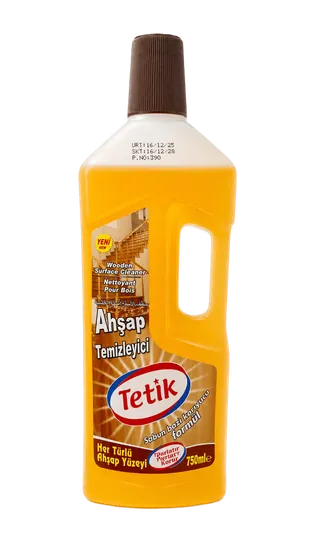
- Wooden table: lift the crayon off with a plastic card without scratching the surface, wipe the remaining mark with a soft cloth and clean with TETİK wood surface cleaner according to the instructions on its label (how to clean wooden furniture).
- Laminate, plastic and glass tables: lift the crayon off, wipe the remaining mark with a cloth dampened with diluted surface cleaner and dry.
- Do not use heat or solvents on varnished and polished surfaces.
What not to do
- Rubbing the stain: crayon softens and spreads.
- Putting the laundry in the tumble dryer before the stain is gone.
- Putting the iron directly on the crayon or the fabric.
- Using abrasive cream, hard sponges or solvents on walls.
- Using bleach on coloured and synthetic fabrics.
- Mixing stain remover with bleach or other cleaning products (can cleaning products be mixed).
For schools, nurseries and kindergartens
In school classrooms, nurseries and kindergartens, crayon stains are seen every day on tables, walls, carpets and smocks. Wiping desks and tables regularly and dealing with stains straight away makes cleaning easier. TETİK Liquid Stain Remover and START Stain Remover are produced in 30 kg packs, TETİK Kar Aspirin in 750 g, 5 kg and 30 kg, and START All-Purpose Surface Cleaner in 5 L. For a product list, see the guide School cleaning supplies list, and for bulk purchases you can request a quote.