Guide · Car wash and vehicle care ·
How to Wash a Motorcycle
On a motorcycle, the engine, chain, brakes and electrical connections are far more exposed than on a car and take road grime, rain and salt directly. So the aim when washing a motorcycle is not only to remove dirt but to keep water out of the wrong places. This guide explains how to wash a motorcycle and a scooter, and what to watch for when cleaning the chain, an electric motorcycle and a helmet.
Before you start
- Move the motorcycle into the shade and wait for the engine and exhaust to cool; do not pour water on a hot engine or exhaust.
- Switch off the ignition, remove the key and put the motorcycle securely on its centre stand or on level ground.
- Check the owner's manual: the manufacturer states which parts must be kept away from water when washing and which care products it recommends.
How to wash a motorcycle: step by step
- Pre-rinse: remove loose dust and mud with gently running water, from top to bottom.
- Apply foam: if you have foam equipment, apply car foam and leave it for a short time without letting it dry.
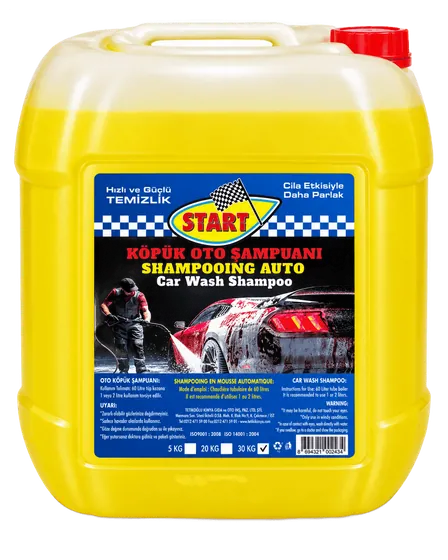
- Wash with shampoo: wash the tank, bodywork and mudguards from top to bottom with START Car Shampoo mixed at the ratio on the label and a soft microfibre mitt.
- Wheels and engine area: clean the wheels and the area around the engine with a separate soft brush; do not use the mitt you used on the paint here.
- Rinse: rinse off the shampoo from top to bottom with plenty of low-pressure water.
- Dry: dry the body with a microfibre towel; wipe the electrical connections, instruments and mirrors separately.
- A short ride: after drying, a short, slow ride helps the remaining water dry off the components; brake gently at first, as wet brakes may bite later.
Where not to aim pressurised water
- Do not aim pressurised water closely at the bearings, steering head, chain, brakes, electrical sockets or instrument panel; water can get past the seals.
- Do not aim pressurised water at the radiator fins; the thin fins can bend.
- Do not spray water under the seat, into the air filter intake or into the exhaust outlet.
Chain care
The chain darkens as road grime and chain lube build up. Clean the chain with the chain cleaner recommended by the motorcycle or chain manufacturer and a suitable brush; on O-ring and X-ring chains, do not use solvents or hard brushes that could damage the seals. Do not use strong alkaline products such as oven degreaser on the chain, aluminium parts or painted surfaces (how to use a degreaser). After washing, dry the chain and lubricate it with the chain lube recommended by the manufacturer.
How to wash a scooter?
Scooters are washed with the same steps as motorcycles, but most of the body panels are plastic and the engine usually sits under them. Wash the panels with car shampoo and a soft mitt; do not aim pressurised water into the panel gaps or the compartment under the seat. On matt and unpainted plastic panels, products containing shine agents can leave marks; wash these surfaces with car shampoo only and dry them.
How to wash an electric motorcycle?
On electric motorcycles and scooters, the battery, charging socket and cable connections are the points most sensitive to water. Before washing, unplug the charging cable, close the charging socket cover and follow the manufacturer's manual. Prefer a damp cloth or gently running water to pressure washing, and do not aim water into the battery compartment.
How to clean a motorcycle helmet?
- Inner padding: if removable, hand wash it in lukewarm water with a mild detergent following the helmet manufacturer's instructions; do not wring it, press the water out into a towel and dry it in the shade (how to hand wash clothes).
- Outer shell: wipe with a microfibre cloth dampened with a little car shampoo solution, then wipe with a clean damp cloth and dry.
- Visor: clean it only with lukewarm water and a soft microfibre cloth; anti-fog and tinted coatings can be damaged by solvent, alcohol-based and abrasive products. Use the product recommended by the helmet manufacturer for the visor.
- Drying: do not dry the helmet on a radiator, stove or with a hot-air blower; the shell and the impact-absorbing inner layer can be damaged by heat.
Common mistakes when washing a motorcycle
- Pouring cold water on a hot engine and exhaust.
- Washing the vehicle with dishwashing liquid: it can thin the protective layer on the paint.
- Aiming pressurised water closely at bearings, the chain, electrical parts and instruments.
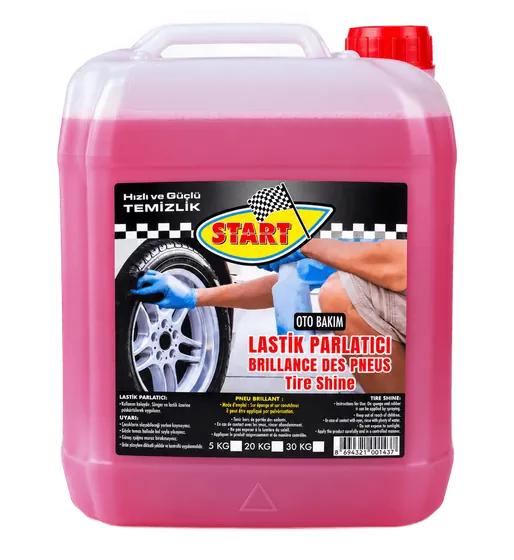
- Applying tyre shine to motorcycle tyres: when leaning into a bend the side of the tyre also touches the road, and a slippery surface reduces grip.
- Getting wax, shine products or oil on the brake discs and pads.
- Leaving the chain unlubricated after washing.
- For bikes and e-bikes: how to wash a bike.
For motorcycle workshops and courier fleets
For motorcycle workshops, courier and delivery fleets and car washes, START Car Shampoo is produced in 5 kg, 20 kg and 30 kg and TETİK Car Foam — Wax in 30 kg packs. For product lists, see our guides car wash supplies and car service cleaning supplies, and request a quote for bulk purchases.