Guide · Product information and safe use
Is Degreaser Harmful? Acid or Base, Effects on Skin, Fabric and Paint
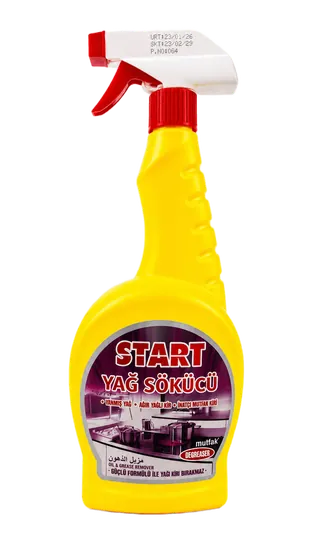
Degreaser is harmful when used incorrectly: it is a strongly alkaline, corrosive product. According to its safety data sheet, the pH of START Degreaser is 12; the product can cause severe skin burns and eye damage, and it fades fabric and damages painted surfaces. Used with gloves and safety goggles, and only on the surfaces listed on its label, it is a cleaner designed for burnt-on grease in ovens, on hobs and in cooker hoods. In this guide we explain, as the manufacturer, its hazards, whether it is an acid or a base, and what it does to each surface.
Is degreaser harmful?
Yes, degreaser is harmful when used without protection or on the wrong surface. The safety data sheet (SDS) of START Degreaser gives the signal word "Danger" and lists three hazard statements: causes severe skin burns and eye damage (H314), may cause an allergic skin reaction (H317), causes serious eye damage (H318).
This does not mean the product cannot be used; it determines how it should be used. Its ability to dissolve burnt-on, baked-on grease comes from being a strong alkali; the same property also acts on skin, fabric and delicate surfaces.
What are the hazards of degreaser?
- Skin: it is corrosive; it can cause burns where it touches and may cause an allergic skin reaction in some people.
- Eyes: splashes or sprayed droplets can cause serious eye damage.
- Inhalation: droplets of the sprayed product must not be inhaled; ventilation is needed in an enclosed kitchen.
- Swallowing: causes burns to the mouth and oesophagus; never transfer the product into a drinks bottle.
- Fabric: fades the colour and damages wool and silk fibres.
- Surfaces: damages aluminium, galvanised metal, painted, lacquered and varnished surfaces, wood and non-stick coatings.
- Mixing: reacts with acidic products; the SDS requires it to be kept away from acids, strong oxidising agents and alcohol.
Is degreaser an acid or a base?
Degreaser is a base; it is an alkaline cleaner. According to the safety data sheet, the pH of START Degreaser is 12. On the pH scale, 7 is neutral and anything above 7 is alkaline; 12 is in the strongly alkaline range.
It is no coincidence that degreaser is alkaline. Grease and burnt food residue dissolve in an alkaline environment, while mineral soiling such as limescale and rust dissolves with acid. That is why degreaser is used for grease in the oven and limescale remover for limescale on the tap; one cannot do the other's job.
- Alkaline (for grease): START Degreaser, pH 12 per its SDS.
- Near neutral (for everyday cleaning): START General Surface Cleaner, pH 7–8 per its SDS.
- Acidic (for limescale and rust): START Limescale & Rust Remover, pH 1–2 per its SDS.
- Acidic and alkaline products are never mixed: they neutralise each other, both lose their effect and the mixture heats up.
- Product-by-product comparison: is surface cleaner an acid or a base.
Can degreaser damage your skin and hands?
Yes. Degreaser can cause burns on contact with skin; even diluted product or product on a cloth is not used without gloves. The slippery feeling of product on your hands shows that it has started to act on the skin.
The safety data sheet also carries an allergic skin reaction warning: even someone who has used it without problems before may develop redness and itching over time. In that case, stop all contact with the product and consult a doctor.
- Gloves: wear rubber or nitrile gloves; make sure no product runs in at the cuff.
- Clothing: wear long sleeves; when cleaning overhead surfaces such as the oven roof, product runs down onto your sleeve.
- In case of contact: wash the skin immediately with plenty of water for a long time and remove clothing the product has got on. If burning, redness or a wound develops, get medical help.
- No home treatment: instead of putting cream, toothpaste or anything else on the burn, follow the guidance of a doctor and a poison centre (in Turkey: UZEM, 114).
Can degreaser damage your eyes?
Yes. According to the safety data sheet, it causes serious eye damage. The risk arises mostly while spraying: product sprayed onto surfaces above face height, such as the cooker hood and the oven roof, splashes back and drips.
- Wear safety goggles; ordinary glasses do not stop splashes from the side.
- On surfaces above head height, put the product on a cloth or sponge and apply it instead of spraying.
- Do not point the spray nozzle towards your face; turn the nozzle to the closed position after use.
- If it gets into the eyes, rinse them immediately with plenty of water for a long time and get medical help; remove contact lenses if present.
Does degreaser damage clothes and fabric?
Yes. A strongly alkaline product fades the colour of fabric and damages the fibres of wool and silk. Degreaser is never sprayed onto grease stains on clothes; colour loss on fabric is permanent.
For grease stains on clothes, a stain remover suitable for the fabric is used. TETİK Kar Aspirin is sprayed onto stains on clothes and rubbed in, then the laundry is washed in the machine; the methods are in the guide how to remove grease stains.
- If it splashes onto clothing: take the garment off immediately and rinse it with plenty of water; do not let the product touch the skin underneath.
- Sofas and carpets: not to be used; it cannot be rinsed out of the fabric and fades the colour.
- Cleaning cloths: rinse cloths used with the product in plenty of water; do not wash them with other laundry.
- Workwear: wear an apron in the kitchen; take off an apron the product has got on and rinse it.
Does degreaser damage paint and car paint?
Yes. Degreaser is not used on painted, lacquered or varnished surfaces; it dulls paint, can make it blister or fades its colour. Kitchen cabinet doors, painted walls, painted doors and wood are among these surfaces.
It is not used on vehicles either: it strips the protective wax from the paint, can dull the paint and plastic parts, and darkens aluminium wheels. We answer questions about engines, wheels, glass and seats in the guide can you clean an engine with degreaser; for washing a car, car shampoo is used.
- Painted walls and cabinets: wipe product that splashes onto painted surfaces around the hob immediately with a damp cloth and then with clean water.
- White marks: product that dries on a surface leaves a white mark; wipe again with a damp cloth and rinse. Darkening on aluminium and dulling of paint, however, are permanent.
- Surfaces you are unsure about: test the product first on a small, hidden area.
Which surfaces does degreaser damage, and where is it used?
Degreaser is for burnt-on and baked-on grease on ovens, hobs, grills and cooker hoods. It is not used on aluminium, galvanised, painted or non-stick coated surfaces; it is applied to hobs, ovens and grills when they are cold.
- Not to be used on: aluminium and galvanised metal, painted, lacquered and varnished surfaces, wood, non-stick coatings such as Teflon, catalytic oven panels, heating elements and electrical parts.
- Food-contact items: not used on pots, pans, chopping boards or plates; these are washed with dishwashing liquid.
- Hot surfaces: never applied to a hot oven or hob; the product evaporates and spatters.
- The surface list and application steps are in the guide how to use degreaser.
What should a degreaser never be mixed with?
Degreaser is never mixed with any other cleaning product. The safety data sheet requires the product to be kept away from acids and acidic substances, strong oxidising agents and alcohol.
In practice this means it is not used in the same container or at the same time as limescale remover, hydrochloric acid or acidic toilet cleaner, bleach, or alcohol-based cleaners. If two products are used one after the other on the same surface, rinse with plenty of water in between. The list is in the guide can cleaning products be mixed.
Rules for use that prevent harm
- Read the label: take the method of use and contact time from the packaging label.
- Protect yourself: wear gloves and safety goggles, and long sleeves.
- Ventilate: open the window or switch on the cooker hood; do not inhale the sprayed product.
- Work on cold surfaces: apply only after the oven, hob and grill have cooled down completely.
- Do not spray upwards: above head height, apply the product with a cloth.
- Protect the surroundings: protect the worktop, cabinet doors and floor from drips; wipe up splashes immediately.
- Rinse: wipe the surface with a damp cloth and rinse; make sure no residue is left before using the oven.
- Original packaging: do not transfer the product into an unlabelled container or a drinks bottle; store it out of the reach of children.
First aid, storage and transport
- Skin or eye contact: rinse immediately with plenty of water for a long time and get medical help.
- Swallowing: do not induce vomiting, rinse the mouth with water and call a poison centre (in Turkey: UZEM, 114).
- Storage: according to the safety data sheet, it is kept in its original packaging, tightly closed and upright, in a dry, cool place away from direct sunlight. The product thickens as the temperature drops.
- Shelf layout: keep it on a separate shelf from acidic products such as limescale remover and hydrochloric acid.
- Transport: according to section 14 of the safety data sheet, it is transported as UN 3266, class 8, packing group I.
- A summary of the sheet is on the START Degreaser safety data sheet page.
START Degreaser pack sizes
- 750 GR (12 per case): for home kitchens and small businesses.
- 5 KG (4 per case): for kitchens that use it regularly.
- 20 KG and 30 KG (sold individually): for restaurant, hotel and canteen kitchens.
- Product codes and documents are on the START Degreaser page.
In restaurant, hotel and canteen kitchens
In a commercial kitchen, degreaser is used every day, which is why most accidents come from habit: working without gloves, decanting the product into unlabelled spray bottles and applying it to a hot grill. Staff should be told that the product is strongly alkaline, which surfaces it must not be used on and what to do in case of contact.
For occupational safety files, a copy of the safety data sheet is shared on request; the list of sheets is on the safety data sheets page. For bulk purchases you can request a quote; prices and terms are given in the quote.