Guide · Product information and safe use
Is Hydrochloric Acid Harmful? Smell, Fumes, Skin Contact and Safe Use
Hydrochloric acid is harmful when used incorrectly: it is a corrosive acid, it burns on contact with skin and eyes, its fumes irritate the eyes and airways, and if mixed with bleach it releases toxic chlorine gas. Used with protection, in a ventilated room, in small amounts and on its own, it is a product for cleaning hardened limescale. In this guide we explain, as a manufacturer, its harmful effects, what to do after exposure to its smell, how to get rid of the smell and the rules that reduce the risk.
Is hydrochloric acid harmful?
Yes, hydrochloric acid is harmful when used without following the rules. It is a hydrochloric acid solution; it is corrosive, must not come into contact with skin or eyes, and its fumes are irritating. The most serious risk is mixing it with bleach or a chlorinated product; the mixture releases toxic chlorine gas.
The harm comes less from the product itself than from the way it is used: pouring large amounts in a closed bathroom, working without gloves, using it together with another product and applying it to the wrong surface. When these four mistakes are avoided, hydrochloric acid is a cleaning product used occasionally on hardened limescale that a bathroom and toilet cleaner cannot remove.
What are the hazards of hydrochloric acid?
- Skin: it is corrosive; it can cause burning, redness and burns where it touches. Never use it without gloves.
- Eyes: splashes can cause serious eye damage; wear safety goggles and do not apply the product above face level.
- Breathing: its fumes irritate the eyes, nose and throat; they build up in small, enclosed spaces.
- Swallowing: it causes burns to the mouth, oesophagus and stomach. Never decant the product into an empty drinks bottle.
- Mixing: with bleach and chlorinated products it releases toxic chlorine gas.
- Surfaces: it permanently damages marble, natural stone, enamel, metal and cement-based grout.
- Environment: do not pour leftover product onto soil, into the garden or into water sources; the rinse water harms plants.
Is the smell of hydrochloric acid harmful?
Yes. The sharp smell of hydrochloric acid is actually acid vapour; if you can smell it, you are breathing in the vapour. These fumes irritate the eyes, nose and throat, and the effect grows as they build up in a closed bathroom.
With brief use of a small amount in a ventilated room, the smell is unpleasant but temporary. If your eyes or throat start to burn or you begin to cough, the room is not ventilated enough: stop working and go out into fresh air.
- Open the door and window: open them before applying the product and keep them open until you finish; run the extractor fan if there is one.
- Do not lean over it: do not work bent over the toilet bowl or bucket; never sniff the product to test its smell.
- Use a small amount: apply the product only to the limescale area instead of pouring it into the whole bowl; the amount of vapour rises with the amount applied.
- Do not use it with hot water: hot water increases evaporation.
- Do not spray it: do not decant the product into a spray bottle; sprayed acid droplets are inhaled directly.
- Keep others out: children, pets and people with respiratory sensitivities should not be in the bathroom during application.
What should you do after exposure to hydrochloric acid fumes?
If you have inhaled hydrochloric acid fumes, go out into fresh air immediately. If the symptoms do not pass, seek medical help; instead of home remedies, follow the advice of a poison centre (in Turkey: UZEM, 114) and a doctor.
- Leave the room: stop working, leave the bathroom and rest in fresh air.
- Ventilate: if you can do so safely, open the door and window on your way out; do not go back until the room has been aired.
- Do not pour in another product: do not use bleach or any other cleaner to mask the smell.
- If it splashed into the eyes or onto the skin: rinse immediately with plenty of water for a long time and seek medical help.
- If symptoms persist: if coughing, a burning throat or difficulty breathing do not pass, seek medical help; you can call a poison centre (in Turkey: UZEM, 114).
- In a serious case: in a serious situation such as shortness of breath, call the emergency number 112. Keep the product packaging with you when you call.
How do you get rid of the smell of hydrochloric acid, and when does it go away?
The smell of hydrochloric acid goes away as the product on the surface is rinsed off with plenty of water and the room is aired. The source of the smell is the product left on the surface; airing the room without rinsing off the residue only prolongs the smell. How long it takes depends on the ventilation: in a bathroom with a window it clears quickly, in a windowless bathroom it takes longer.
- Rinse: flush the toilet several times; rinse the tiles and floor with plenty of water and wipe them once more with clean water.
- Ventilate: leave the window open, run the extractor fan and keep the bathroom door open.
- Wash the tools: rinse the brush, gloves and any container you used with water; a brush left wet in the bathroom keeps giving off the smell.
- Close the packaging: screw the cap on tightly; an open bottle gives off fumes.
- Do not mask the smell with another product: do not pour in bleach, a chlorinated toilet block or another cleaner; covering it with air freshener does not remove the smell.
- If the smell persists: there is residue on the surface, in the grout or in the drain; rinse again with plenty of water.
What happens if it is mixed with bleach?
When hydrochloric acid comes into contact with bleach, a chlorinated toilet block or another product containing chlorine, toxic chlorine gas is released. This is the most serious accident involving hydrochloric acid, and it usually happens unknowingly: bleach is poured into the toilet first and hydrochloric acid after it, or a chlorinated block hanging in the bowl is forgotten.
Always use hydrochloric acid on its own. If you have already used another product on the same surface, rinse it first with plenty of water. If an accidental mixture has occurred, leave the room immediately; we list what to do in the can cleaning products be mixed guide.
Does hydrochloric acid damage the toilet, plastic and other surfaces?
Hydrochloric acid generally does not damage glazed ceramic and porcelain; it does damage marble, natural stone, enamel, metal and cement-based grout. The toilet bowl itself is resistant, but the parts around it are not.
- Toilet bowl: glazed ceramic and porcelain are generally resistant to acid; if the product is left only briefly and then rinsed off, the bowl is not damaged.
- Other toilet parts: it can leave marks and dullness on the plastic seat and lid; it corrodes the chrome flush button, hinges and metal fittings. Do not pour it into the cistern.
- Plastic: hydrochloric acid is sold in plastic bottles and does not dissolve common plastics; however, it can leave marks on glossy plastic surfaces. Wipe off any splashes with water immediately.
- Marble and natural stone: it etches and dulls the surface; the damage cannot be cleaned away.
- Metal: it corrodes and stains chrome, nickel, aluminium and stainless steel. Over time its fumes also make metal parts rust.
- Grout and enamel: it eats out cement-based grout and dulls the shine of an enamel bathtub.
- Application and contact-time rules for each surface are in the where and how to use hydrochloric acid guide.
Is hydrochloric acid flammable?
Hydrochloric acid is not flammable. However, it can release flammable hydrogen gas on contact with metals; so do not leave it in a metal bucket, and do not store it on a metal shelf or next to metal objects. Do not leave it near a heat source or in the sun; the warmer it gets, the more fumes it gives off.
Rules of use that reduce its harm
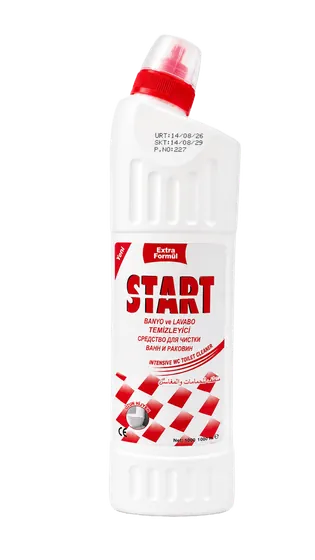
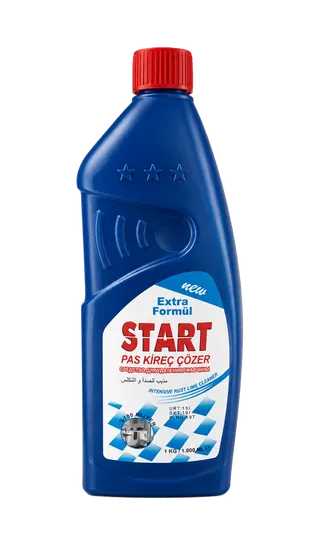
- Try a milder product first: for everyday cleaning START bathroom and toilet cleaner is enough, and for regular limescale START limescale and rust remover. Hydrochloric acid is only for thick, hardened limescale.
- Protect yourself: wear gloves and safety goggles; if possible, wear long sleeves.
- Ventilate: open the window and door; in a windowless bathroom, run the extractor fan and keep the job short.
- Use little, and only where needed: apply a small amount only to the limescale area; follow the packaging label for amount and time.
- Use it on its own: never mix it with any cleaning product.
- Do not leave it and forget it: do not let the product dry on the surface or sit overnight; rinse it off.
- Original packaging: do not decant it into an unlabelled container, a spray bottle or a drinks bottle; close the cap immediately.
- Storage: keep it in a cool, ventilated place, on a separate shelf from bleach, out of the reach of children and pets.
First aid for skin and eye contact and swallowing
- Skin contact: remove contaminated clothing and rinse the skin immediately with plenty of water for a long time; if burning or redness persists, seek medical help.
- Eye contact: rinse the eye immediately with plenty of water for a long time and seek medical help.
- Swallowing: do not induce vomiting, rinse the mouth with water and call a poison centre (in Turkey: UZEM, 114).
- Inhalation: go out into fresh air; if symptoms persist, seek medical help.
- When going to a healthcare facility, take the product's packaging or label with you.
Hydrochloric acid in businesses: staff and storage
In hotels, schools, shopping centres and cleaning companies, hydrochloric acid should not be handed out as an everyday product; it should be used only for hardened limescale, by staff who know the job and with protective equipment. Most accidents come from decanting the product into unlabelled bottles and carrying it on the same trolley as bleach.
Keep the product in its original, labelled packaging; in the storeroom, store it on a separate shelf from bleach and chlorinated products, on an acid-resistant surface rather than a metal shelf. For everyday toilet cleaning, see our bathroom and toilet products, and for bulk purchases you can request a quote.
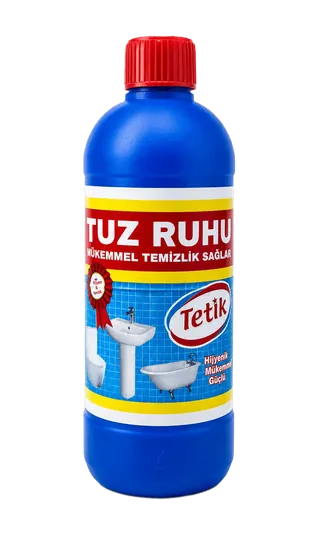
- TETİK Hydrochloric Acid Cleaner (Tuz Ruhu): 600 GR (20 per case) and 2.5 KG (6 per case).
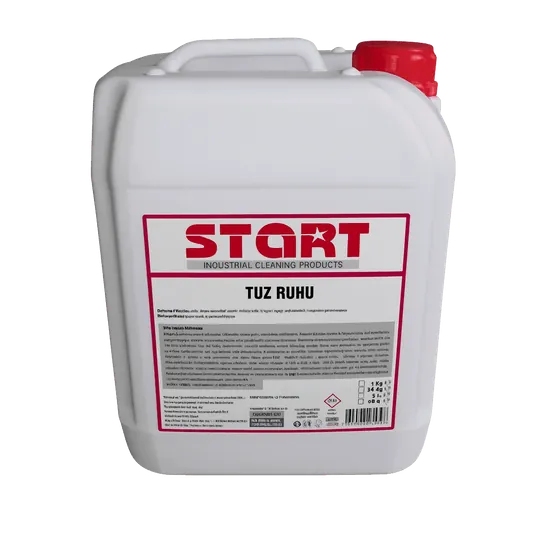
- START Hydrochloric Acid Cleaner: 5 KG (4 per case) and 30 KG (sold singly).