Guide · Floors, furniture and surfaces ·
How to Clean Travertine
Travertine is a natural stone used on floors, walls, bathrooms and tables for its porous texture and warm tones. Like marble, it is made of calcium carbonate, so it reacts with acids, and its pores easily trap dirt and liquids. This guide explains how to clean travertine floors, tables and bathroom surfaces, how to remove stains and which products should not be used on travertine.
What is travertine?
- Calcareous natural stone: travertine is based on calcium carbonate; acids such as vinegar, lemon and limescale remover dissolve its surface.
- Porous structure: the natural holes in the surface trap dirt, water and grease; in filled travertine these holes have been closed with filler.
- Surface finishes: polished, honed (matt) and tumbled finishes look different; all are cleaned on the same neutral-cleaning principle.
- The care instructions of the stonemason or manufacturer always take priority.
How to clean travertine: step by step
- Sweep: sweep up sand and dust or remove them with a dry mop; sand grains scratch polished travertine.
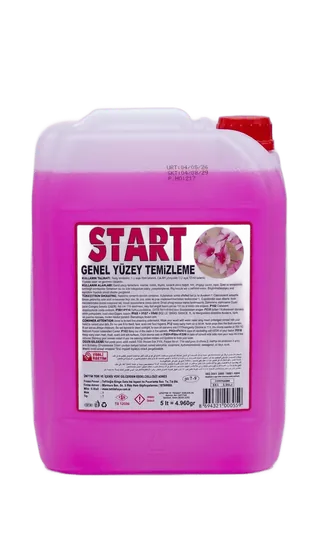
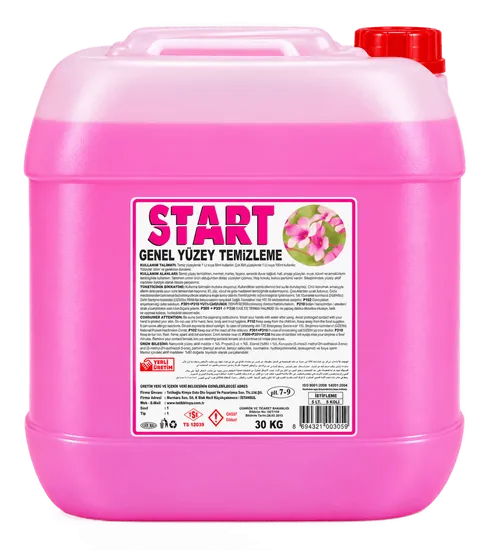
- Choose a neutral cleaner: add a near-neutral surface cleaner to lukewarm water at the dose on the label. According to its safety data sheet, START Genel Yüzey Temizleyici has a pH of 7–8.
- Wipe with little water: wring the mop out well; do not let water collect in the pores and joints.
- Brush the pores: remove dirt built up in the pores with a soft brush.
- Dry: dry the surface with a dry cloth or mop so that no water marks remain on polished travertine.
How to clean travertine floors?
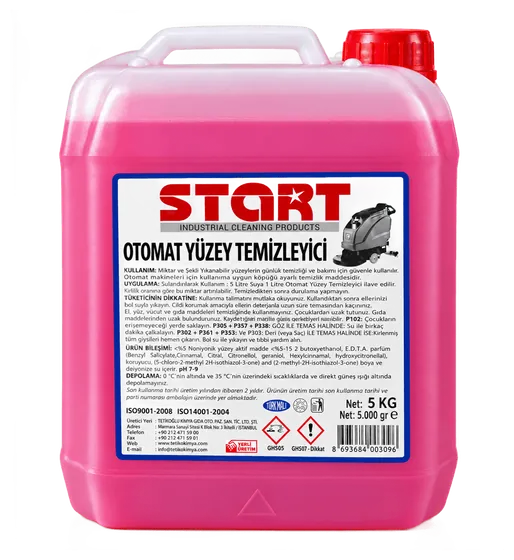
Large travertine floors in hotel lobbies, villas and commercial areas can be cleaned with a scrubber-dryer and a low-foaming floor scrubber surface cleaner. According to its safety data sheet, START Floor Scrubber Surface Cleaner has a pH of 7–8. On polished travertine, choose a soft pad instead of a hard brush or abrasive pad. For details, see our guide scrubber-dryer detergent.
How to clean a travertine table?
Wipe travertine tables and coffee tables daily with lukewarm water and a little neutral cleaner, then dry them. Do not leave acidic or coloured drinks such as lemon, vinegar, wine, coffee and cola on the table; blot them up immediately when spilled. Using coasters under glasses and cups prevents ring marks. The same rules apply to marble worktops and tables: how to clean marble.
Travertine in the bathroom
Soap residue and white marks from hard water form on travertine walls and floors in the bathroom. Wipe these surfaces with a neutral cleaner and dry them; do not use limescale remover on limescale marks, as acid burns travertine. Drying the travertine with a squeegee or dry cloth after showering prevents marks from building up. For general bathroom cleaning, see how to clean a bathroom.
Travertine stains
- Grease stain: travertine absorbs grease; blot the stain immediately with kitchen paper, then wipe with lukewarm water and a little dishwashing liquid and rinse.
- Coffee, tea and wine: blot them up without delay; rubbing spreads the stain into the pores.
- Rust stain: rust removers are not used on travertine; consult a stone care specialist.
- Acid burns and dullness: a surface eaten away by acid cannot be restored by cleaning; it needs professional grinding and polishing.
- For deep-set and old stains, consult a stone care specialist.
What not to use on travertine
- Limescale removers, hydrochloric acid and acidic toilet cleaners.
- Vinegar, lemon and acidic home mixtures.
- Abrasive powders and creams, wire and hard scrubbing sponges.
- Washing with lots of water and leaving it to dry.
For hotels, villas and commercial spaces
Travertine surfaces in hotels, villas, restaurants and shops last a long time with regular neutral cleaning and the right equipment; consult a stonemason about sealing and surface protection. Our START all-purpose surface cleaner is produced in 5 L and START Floor Scrubber Surface Cleaner in 5 kg, 20 kg and 30 kg packs. For the product list, see our guide Hotel cleaning supplies list; request a quote for bulk purchases.