Guide · Laundry and clothes washing
Is Bleach Harmful? Its Smell, Inhaling It and Skin Contact
Bleach is harmful when used incorrectly: it is a strongly alkaline, corrosive product that burns on contact with skin and eyes; its fumes, which build up in enclosed spaces, irritate the eyes and airways; and it releases toxic gas when mixed with acidic products. Diluted to the amount on its label, used in a ventilated room and on its own, it is used for whitening white laundry and cleaning surfaces. In this guide we explain its hazards based on our safety data sheets, what to do after exposure to its smell, and the rules that reduce the risk.
Is bleach harmful?
Yes, bleach is harmful when used without following the rules. According to the safety data sheet (SDS), the pH of START Bleach is 12–14; the product is strongly alkaline and corrosive, and its signal word is "Danger".
Most of the harm comes from four mistakes: mixing the product with another cleaner, using it in an enclosed, unventilated space, working with it undiluted or without gloves, and applying it to the wrong surface. When these mistakes are avoided, bleach is a cleaning product widely used in homes and businesses.
What are the hazards of bleach?
The safety data sheet of START Bleach lists four hazard statements. A summary of the sheet is on the START Bleach safety data sheet page.
- Skin (H314): causes severe skin burns and eye damage. Undiluted product must not come into contact with skin; wear gloves.
- Eyes (H318): causes serious eye damage. Wear safety goggles against splashes; do not spray the product onto surfaces with a spray bottle.
- Breathing: fumes that build up in an enclosed space can irritate the eyes and airways.
- Swallowing: causes burns to the mouth and oesophagus. Never pour the product into an empty drinks bottle.
- Mixing: releases chlorine gas with acidic products and chloramine gases with ammonia-based products.
- Aquatic environment (H400, H410): very toxic to aquatic life, with long-lasting effects. Leftover product must not be poured onto soil or into nature.
- Fabrics and surfaces: damages coloured, woollen and silk fabrics, metal, marble and wood.
Is the smell of bleach harmful?
In a ventilated room, the smell of bleach diluted to the amount on the label is to be expected. In a small, enclosed space, with undiluted product or when used with hot water, however, the fumes build up and can irritate the eyes, nose and throat.
If the smell suddenly becomes sharp and choking, the bleach has most likely mixed with an acidic product. In that case, do not wait: leave the room immediately.
Can bleach smell cause headaches and coughing?
If you feel a headache, burning eyes, a burning throat or a cough while working with bleach, take it as a sign that the room is not ventilated enough. Stop working, go out into fresh air and open the windows. If the complaint does not go away in fresh air, get medical help; the cause and treatment of the symptom are determined by a doctor.
Mistakes that make the smell stronger
Using the product with hot water, increasing the amount, spraying it, working for a long time in a bathroom with the door closed and using it at the same time as another cleaner all increase the fumes. Bleach is diluted with cold water, to the amount on the label; more product does not mean better cleaning.
What happens if you inhale bleach, and what should you do after exposure to its smell?
A person who has inhaled bleach fumes should go out into fresh air immediately. If the complaint persists, get medical help; instead of home remedies, follow the guidance of a poison centre (in Turkey: UZEM, 114) and a doctor.
- Leave the room: stop working and go out into fresh air; take children and pets out of the area as well.
- Ventilate: if you can reach them safely, open doors and windows on your way out; do not go back until the room has aired.
- Do not add another product: do not pour another cleaning product to mask the smell or neutralise the mixture.
- If it splashed into the eyes or onto the skin: rinse immediately with plenty of water for a long time and seek medical help.
- If symptoms persist: if coughing, a burning throat or difficulty breathing do not pass, seek medical help; you can call a poison centre (in Turkey: UZEM, 114).
- In a serious case: if there is a serious problem such as shortness of breath, call 112. Keep the product's packaging or label with you when you call.
How do you get rid of bleach smell?
Bleach smell goes away as the surface is rinsed with clean water and the room is aired. The source of the smell is product left on the surface, in the bucket or on the cloth; the smell will not go until the residue is rinsed off.
- From the room: rinse the surface with clean water, leave the window and door open, empty and wash the bucket, and rinse the cloth and mop you used with plenty of water.
- From your hands: wash your hands with plenty of soap and water. If the smell stays on your hands, the product has come into contact with your skin; wear gloves next time.
- From laundry: rinse the laundry once more and dry it outdoors.
- Do not mask the smell with another product: do not pour vinegar, hydrochloric acid, limescale remover or any other cleaner; acidic products release toxic gas with bleach.
The real danger: mixing bleach with another product
Do not mix bleach with hydrochloric acid, limescale and rust removers, acidic toilet cleaners or ammonia-based products. Bleach mixed with acid releases chlorine gas, and mixed with ammonia-based products it releases chloramine gases; these gases damage the airways.
Mixing usually happens unknowingly: one product is poured into the toilet, then the other, or two products are used in the same bucket. If you are going to use two products one after the other on the same surface, rinse with plenty of water in between. The list of products that must not be mixed is in the guide can cleaning products be mixed.
First aid for skin and eye contact and swallowing
- Skin contact: wash immediately with plenty of water; remove clothing the product has got on.
- Eye contact: rinse immediately with plenty of water for a long time and get medical help.
- Swallowing: do not induce vomiting and call a poison centre (in Turkey: UZEM, 114).
- Inhalation: go out into fresh air; if symptoms persist, seek medical help.
- When going to a healthcare facility, take the product's packaging or label with you.
Does bleach damage fabric, metal and jewellery?
Yes. Bleach is meant for white and bleachable fabrics and for resistant surfaces such as glazed ceramics; it leaves permanent marks on coloured fabric, metal and natural stone.
- Coloured, woollen, silk and elastane fabrics: it fades the colour and weakens the fibres. For marks on coloured laundry, see the guide how to remove bleach stains.
- Metals: the safety data sheet requires the product to be kept from contact with nickel, copper, tin, manganese and iron. It causes darkening and pitting corrosion on stainless steel, chrome and aluminium; do not leave it standing in a metal container.
- Gold and silver jewellery: jewellery alloys contain copper and nickel; bleach can tarnish them. Take off rings and bracelets and wear gloves when working with bleach.
- Marble, natural stone and wood: it dulls the surface of stone and fades the colour of wood.
- Food-contact surfaces: not used on worktops, chopping boards or dishes; dishes are washed with dishwashing liquid.
- Where it can and cannot be used is explained surface by surface in the guide how to use bleach.
Is bleach harmful to the environment?
In the safety data sheet, bleach is classified as very toxic to aquatic life (H400, H410). That is why leftover product is never poured onto soil, into the garden, into a stream or down a storm drain, and canisters and bottles are not left in nature.
In businesses, if a large amount of product is spilled, the leak is contained before it reaches the sewer and the soil; the steps to take are given in the product's safety data sheet.
Is thick or ultra thick bleach more harmful?
The safety data sheet of START Ultra Thick Bleach also lists pH 12–14, the signal word "Danger" and the same hazard statements (H314, H318, H400, H410). So the protection rules are the same: gloves, safety goggles, ventilation and using it on its own.
The difference lies in use: the thick product stays longer on vertical surfaces, so it must be rinsed thoroughly after it has been left to act. We explain the difference between thick and regular bleach in the guide what is thick bleach.
Rules of use that reduce its harm
- Read the label: take the amount and contact time from the packaging label; do not increase the amount.
- Dilute with cold water: hot water increases the fumes; add the product to the water.
- Protect yourself: wear gloves and safety goggles; take off your jewellery.
- Ventilate: open the window and door; keep the job short in a small bathroom.
- Do not spray: do not transfer the product into a spray bottle; apply it with a cloth, mop or brush.
- Use it on its own: do not mix it with any other cleaning product or put it in the same bucket.
- Rinse: after application, rinse the surface with clean water; wash the bucket and cloth.
- Storage: keep it in its original, labelled packaging, tightly closed and upright, in a dry, cool place away from sunlight, on a separate shelf from hydrochloric acid and limescale remover, out of the reach of children.
Our bleach products and safety information
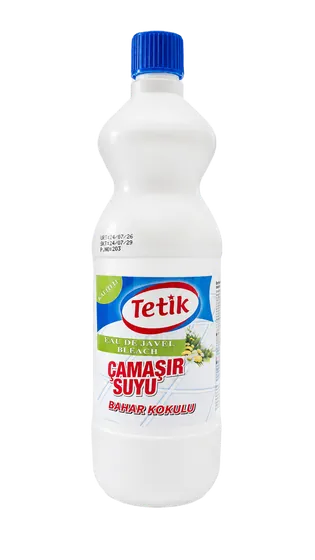
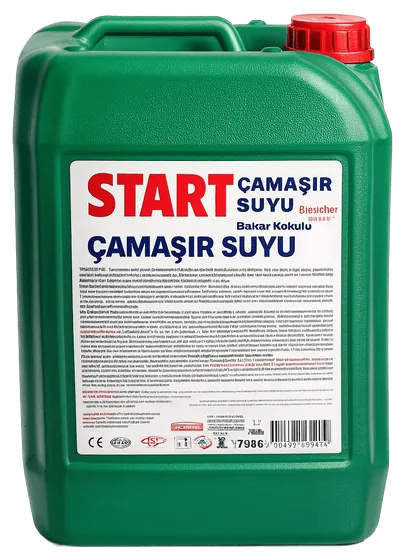
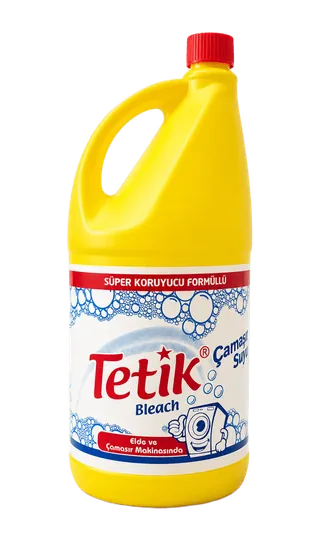
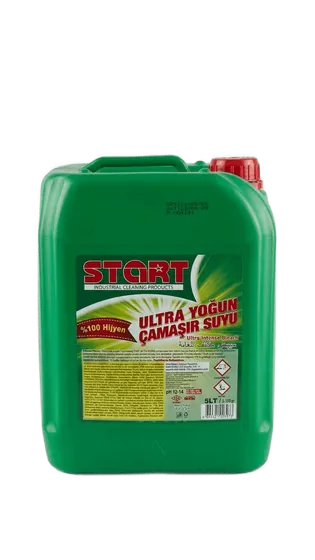
We produce bleach in different sizes, from household bottles to commercial canisters. The safety summary of each product is on its own product page; product codes and case contents are on the our bleach products page.
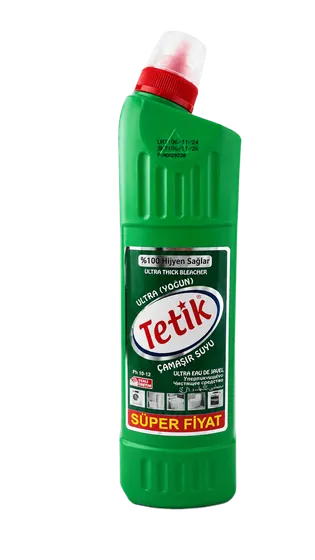
- TETİK Bleach: 1 KG (15 per case), 2,5 KG (6 per case) and 4,3 KG (4 per case).
- START Bleach: 5 KG (4 per case), 20 KG and 30 KG canisters.
- TETİK Thick Bleach: 800 GR (16 per case), 5 KG (4 per case), 20 KG and 30 KG canisters.
- START Ultra Thick Bleach: 5 L, 20 kg and 30 kg.
- For the pH scale and the difference between acids and bases: bleach pH value.
In hotels, schools, hospitals and cleaning companies
Bleach is one of the most used products in businesses and one of the most often involved in accidents. Staff are taught three rules: the product is never decanted into unlabelled bottles, it is never kept on the same trolley or in the same bucket as acidic products, and no one works in an enclosed space without ventilation.
For occupational safety files and institutional purchasing, a copy of the safety data sheet is shared on request; the list of sheets is on the safety data sheets page. For bulk purchases you can request a quote; prices and terms are given in the quote.