Guide · Product information and safe use ·
What Is the pH of Bleach?
Bleach is an alkaline product. In this guide we set out the pH value, signal word and hazard statements from the safety data sheets (SDS) of our START bleaches, what these values mean in use, and why bleach is never mixed with acidic products.
How high is the pH of bleach?
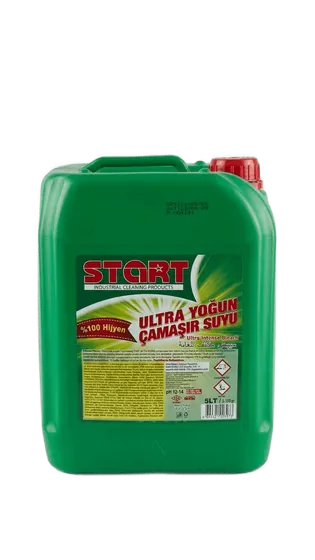
According to its safety data sheet (SDS), START Bleach has a pH of 12–14; in other words, it is not an acid but a strongly alkaline product. The SDS of START Ultra Thick Bleach also gives a pH of 12–14.
The active substance in bleach is sodium hypochlorite. The product is kept in an alkaline medium so that it stays stable. When an acid gets in, chlorine gas forms. That is why the most important practical consequence of the pH value is the ban on mixing. The production steps are in our guide how is bleach made.
Where does 12–14 sit on the pH scale?
The pH scale runs from 0 to 14, and 7 is the neutral point. Values below 7 indicate acidic products, values above it basic (alkaline) ones. The scale is logarithmic: a difference of one unit means a tenfold difference in acidity or alkalinity. The 12–14 range is the alkaline end of the scale.
- Acidic end: the SDS gives a pH of 1–2 for START Limescale & Rust Remover; the signal word is "Danger". It is used with gloves and safety goggles, and not on metal, taps and fittings, marble or natural stone.
- Close to neutral: 7–8 for START All-Purpose Surface Cleaner.
- Alkaline end: 12 for START Degreaser; 12–14 for START Bleach and START Ultra Thick Bleach. The SDS of START Degreaser also gives the signal word "Danger" and hazard statement H314; it is used with gloves and safety goggles, and not on aluminium or painted surfaces.
- Products from the two ends of the scale are never combined: if an acidic limescale remover and alkaline bleach mix, chlorine gas is released. Values for other product types are in our guide what are cleaning chemicals.
SDS values of our START bleaches
The values below are taken from the safety data sheets of the two products.
- START Bleach: pH 12–14; signal word "Danger"; pictograms GHS05 (corrosion) and GHS09 (environment); hazard statements H314, H318, H400 and H410; for transport UN 1791, class 8, packing group II.
- What to keep START Bleach away from: acids and acidic substances; nickel, copper, tin, manganese and iron; sunlight and prolonged excessive heat.
- START Ultra Thick Bleach: pH 12–14; signal word "Danger"; pictograms GHS05 (corrosion) and GHS09 (environment); hazard statements H314, H318, H400 and H410; for transport UN 1791, class 8, packing group II.
- What to keep START Ultra Thick Bleach away from: acids, strong bases, strong oxidising agents and peroxides; sunlight and prolonged excessive heat.
- Name and pH: the words "ultra thick" describe the consistency; the pH value is read from the SDS, not from the product name. The difference in consistency is explained in our guide what is thick bleach.
- Requesting the sheet: a safety data sheet can be requested for START Bleach and START Ultra Thick Bleach; how to request one is on the safety data sheets page.
What do these values mean in use?
- H314: Causes severe skin burns and eye damage. Wear gloves and safety goggles and ventilate the area; do not transfer the product into a spray bottle and spray it onto surfaces.
- H318: Causes serious eye damage. What to do if it splashes into the eyes is in the safe-use section of our guide how to use bleach.
- H400: Very toxic to aquatic life.
- H410: Very toxic to aquatic life with long lasting effects. Do not pour leftover product onto soil or into the environment; prevent large spills from reaching drains and water sources.
- "Danger": the more serious of the two signal words used on an SDS; "Warning" is used for less severe hazard categories.
- What it is used for: bleach is used to whiten white laundry and to clean surfaces such as bathrooms, toilets and floors. Limescale and rust are dissolved by acidic products; for limescale, use a limescale remover instead of bleach. Areas of use are covered in our guide what is bleach used for.
- Surface: the SDS of START Bleach requires it to be kept away from nickel, copper, tin, manganese and iron; do not use it on metal surfaces or taps and fittings, and rinse straight away if it splashes. On marble, natural stone and wood, choose a neutral cleaner.
- pH is not the only measure: the pH value alone does not show that a product is safe or suitable for a surface; the measure is the instructions and warnings on the pack label.
Why is bleach never mixed with acidic products?
If bleach mixes with hydrochloric acid, a limescale remover or an acidic toilet cleaner, chlorine gas is released; if it mixes with an ammonia-based product, chloramine gases are released. These gases harm the airways, and chlorine gas also irritates the eyes and nose. The SDSs reflect this: acids head the list of substances to avoid on the START Bleach sheet, while the sheet for START Bathroom & Toilet Cleaner warns of a violent reaction with chlorinated products such as bleach.
- Use it on its own: do not mix bleach with any other cleaning product; bleach diluted with water to the measure on the label must not come into contact with acidic products either.
- Rinse in between: if you use two products one after the other on a surface, rinse the surface with plenty of water in between.
- If they mix by accident: leave the room straight away and ventilate it; if symptoms start, call 114, Turkey's National Poison Information Centre (UZEM).
- Which products can be used one after the other, and in what order, is explained in our guide can cleaning products be mixed.
Storage, shelving and transport
- Storage: the SDSs of START Bleach and START Ultra Thick Bleach require the product to stay in its original packaging, tightly closed and upright, and to be stored in a dry, cool place away from food, drink and animal feed. Keep the product out of the reach of children.
- Light and heat: both sheets say to keep the product away from sunlight and prolonged excessive heat.
- Shelving: keep bleach on a separate shelf from acidic products such as hydrochloric acid and limescale remover, so that the products cannot mix if a pack leaks.
- Transport: give the carrier the UN number and transport class stated on the SDS of our START bleaches; carry the packs upright with the caps tightly closed.
- For warehouse layout and the transport of dangerous goods, see our guide how to store and transport cleaning products.
TETİK bleaches and their packaging
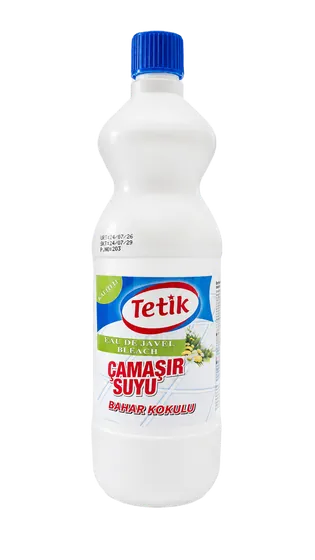
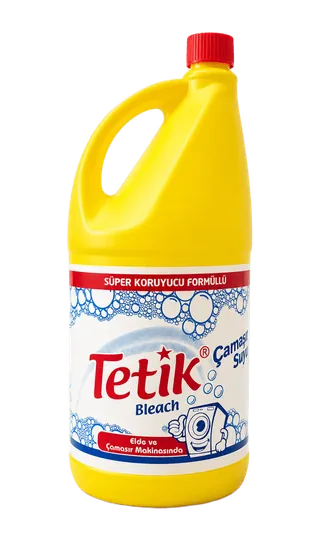
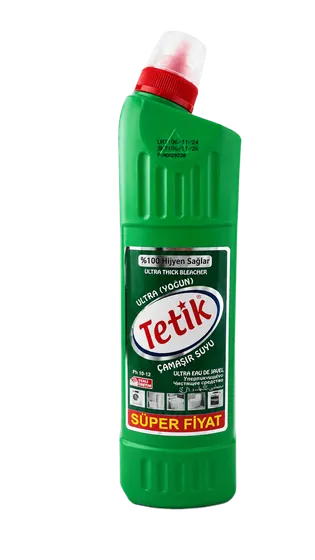
Our TETİK-brand bleaches come in the packs below. Each product's safety summary is on its own product page; read the instructions and warnings on the pack label before use.
- TETİK Bleach: 1 kg, 2.5 kg and 4.3 kg; 15, 6 and 4 per case respectively.
- TETİK Thick Bleach: 800 g and 5 kg (16 and 4 per case); 20 kg and 30 kg are sold individually.
- TETİK Bleach — Yellow Canister: 2.5 L, sold individually.
For wholesale buyers and institutional purchasers
- Specification: in the technical specification, ask for a Turkish-language safety data sheet for each product, and require it to state the pH value, signal word and hazard statements. For preparation, see our guide technical specification for cleaning supplies.
- Reading the sheet: pH is in section 9 (physical and chemical properties), the signal word and hazard statements in section 2, storage in section 7 and transport in section 14. The sections are explained in our guide what is a safety data sheet.
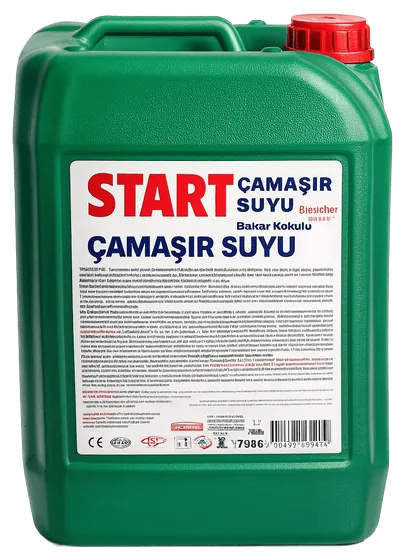
- START packaging: START Bleach 5 kg (4 per case), 20 kg and 30 kg (sold individually); START Ultra Thick Bleach 5 L, 20 kg and 30 kg (20 kg sold individually).
- Bulk-buying guides: for details on packaging, cases and storage, see our guides choosing bleach in canisters and wholesale thick bleach.
- Quotes and contact: send the product, packaging and quantity via the quote form; for questions, use the contact page.
- Tetikoğlu Kimya is a bleach manufacturer; we make the bleaches named in this guide at our production facility in Istanbul İkitelli OSB.