Guide · Baby and children's items ·
How to Clean Baby Bottles
Milk and formula residue builds up inside a baby bottle, and dried milk sticks to the tip of the teat and the threads of the screw ring. After every use, the bottle is taken apart, washed in lukewarm water with dishwashing liquid and rinsed thoroughly until no detergent remains. This guide explains how to clean baby bottles, bottle teats and yellowed bottles. For boiling and sterilising bottles, follow the advice of the bottle manufacturer and your paediatrician; we make no specific suitability claim for babies.
Before you start
- Take it apart: separate the bottle into the body, teat, screw ring and cap.
- Don't let it sit: rinse the bottle with cold water straight after use; dried milk is hard to remove.
- Use separate brushes: use a dedicated bottle brush and teat brush for baby bottles.
- Read the manufacturer's information: check whether the bottle can go in the dishwasher and whether it can be boiled.
How to clean baby bottles: step by step
- Take the bottle apart and rinse away milk residue with cold water.
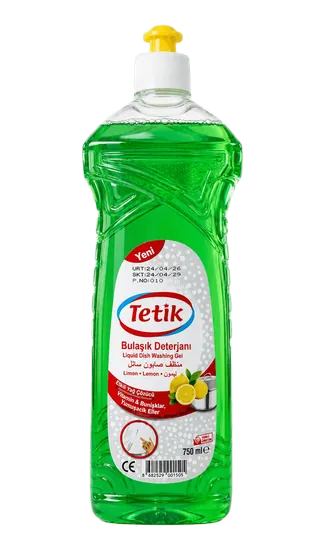
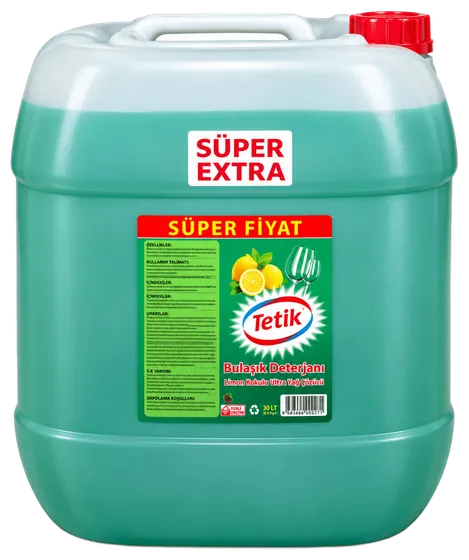
- Fill a bowl with lukewarm water and add a small amount of TETİK dishwashing liquid.
- Wash the inside of the bottle with a bottle brush, scrubbing the bottom and the shoulder as well.
- Clean the threads of the screw ring and the cap with a small brush.
- Rinse all parts under running water thoroughly until no detergent remains.
- Place the parts upside down on a clean drying rack and let them dry completely; do not reassemble them before they are dry.
How to clean bottle teats
Clean the inside of the teat and the hole at its tip with a teat brush in lukewarm soapy water; turn the teat inside out to remove milk residue as well. Rinse the teat thoroughly under running water and run water through the hole to check that no residue remains. Do not try to open the teat tip with a sharp object; the hole gets bigger and the teat is damaged. Replace teats that become sticky, cracked, torn or discoloured according to the manufacturer's advice.
How to clean yellowed baby bottles
Plastic bottles can turn yellow and cloudy over time due to milk fat, formula and heat. Part of the yellowing comes from a layer of milk fat on the surface; remove this layer by scrubbing with a bottle brush in lukewarm soapy water and rinse thoroughly. Discolouration in the plastic itself does not come out with cleaning. Replace yellowed, scratched, cracked or cloudy plastic bottles according to the manufacturer's advice. Do not use bleach, surface cleaner, limescale remover or abrasives on baby bottles.
Glass and new bottles
- Glass bottle: a glass bottle is also washed with lukewarm water and dishwashing liquid; do not put a hot bottle into cold water, as a sudden temperature change can crack the glass. Do not use a cracked glass bottle or one with a chipped rim.
- New bottle: before first use, take a newly bought bottle apart and wash it with the steps above; for boiling or sterilising, follow the manufacturer's instructions.
- White marks: do not use limescale remover for white marks left in the bottle after boiling; wash the bottle with soapy water, rinse it and follow the manufacturer's advice.
- Dishwasher: wash the bottle on the top rack of the dishwasher only if the manufacturer allows it.
- For high chairs and baby clothes: how to clean a high chair, how to wash baby clothes.
What not to do
- Leaving the bottle with milk residue after use.
- Leaving detergent residue in the bottle.
- Using bleach, surface cleaner or limescale remover on baby bottles.
- Using steel wool and abrasives.
- Reassembling and closing the parts before they are dry.
For nurseries and maternity units
In nurseries, baby-changing rooms and maternity units, many bottles and feeding bowls are washed every day; labelling bottles by baby, using separate brushes and rinsing and drying them thoroughly keeps the routine orderly. Where sterilisation, hygiene and disinfection are required, follow your institution's procedure and the relevant regulations. For nursery cleaning, see the guide how to clean a nursery. TETİK dishwashing liquid is produced in 750 g, 5 kg, 20 kg and 30 kg packs; for bulk purchases you can request a quote.